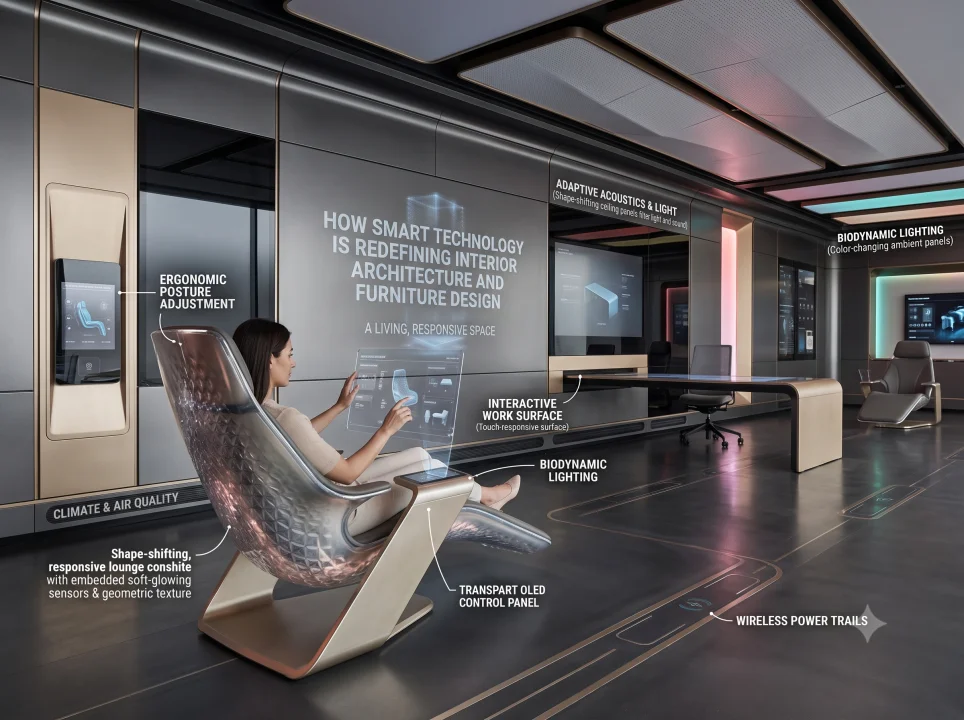
Technology is no longer an addition to interior spaces—it has become an integral part of how they are planned, designed, and experienced. From intelligent lighting systems to connected furniture and AI-powered design tools, technological innovation is reshaping both interior architecture and furniture design. The goal is no longer simply to create beautiful spaces, but to build environments that respond to the needs of their occupants in real time.
As digital solutions become more sophisticated, designers are finding new ways to combine aesthetics, functionality, and automation. According to FurniPress, the integration of smart technology is becoming one of the defining characteristics of next-generation interiors.
The Evolution of Smart Interiors
Smart homes were once associated mainly with voice assistants and connected appliances. Today, the concept has expanded to include nearly every aspect of interior architecture.
Lighting systems automatically adjust according to natural daylight. Climate control responds to occupancy and weather conditions. Motorized furniture adapts to different activities throughout the day. These technologies work together to create environments that are more efficient, comfortable, and personalized.
Rather than existing as separate devices, smart technologies are increasingly integrated into the architectural design itself.
AI-Assisted Interior Planning
Artificial intelligence is changing the way designers approach projects.
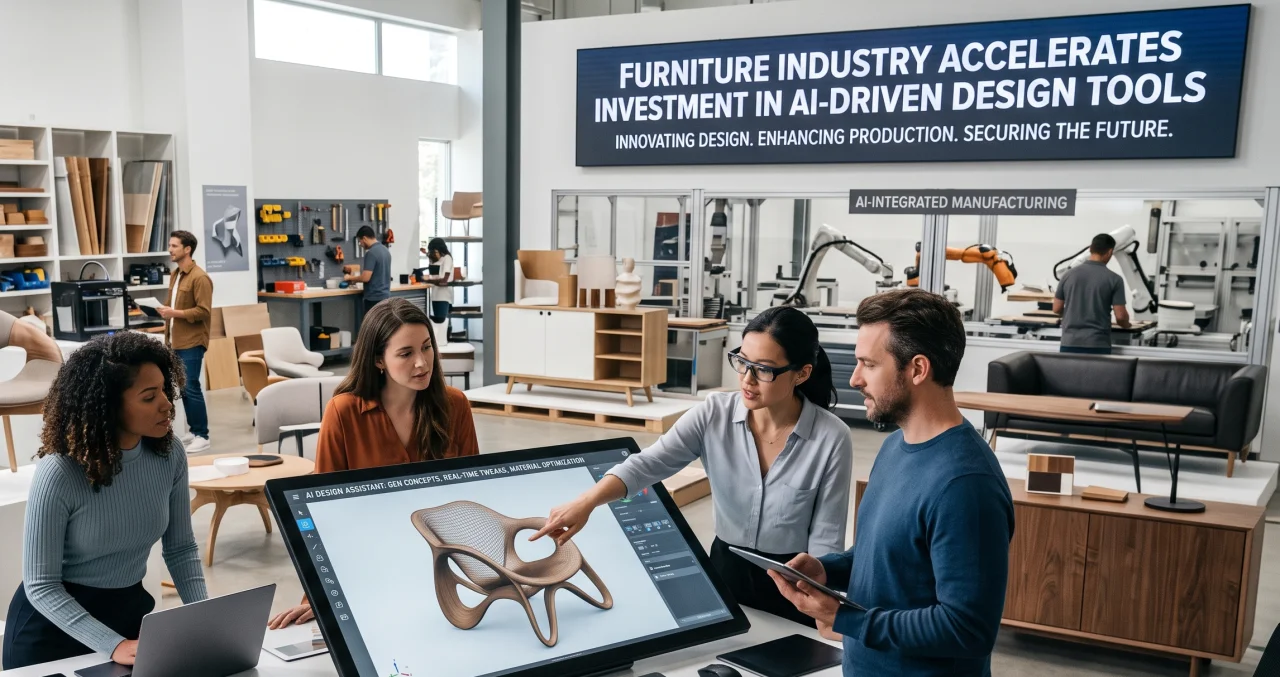
AI-powered software can analyze room dimensions, circulation patterns, natural lighting, and furniture layouts in seconds. Designers can quickly compare multiple design options while identifying the most functional arrangements for a given space.
For homeowners, AI visualization tools make it easier to preview different furniture styles, color palettes, and materials before construction or renovation begins.
Connected Furniture
Furniture is becoming smarter as digital technologies are integrated directly into everyday products.
Examples include:
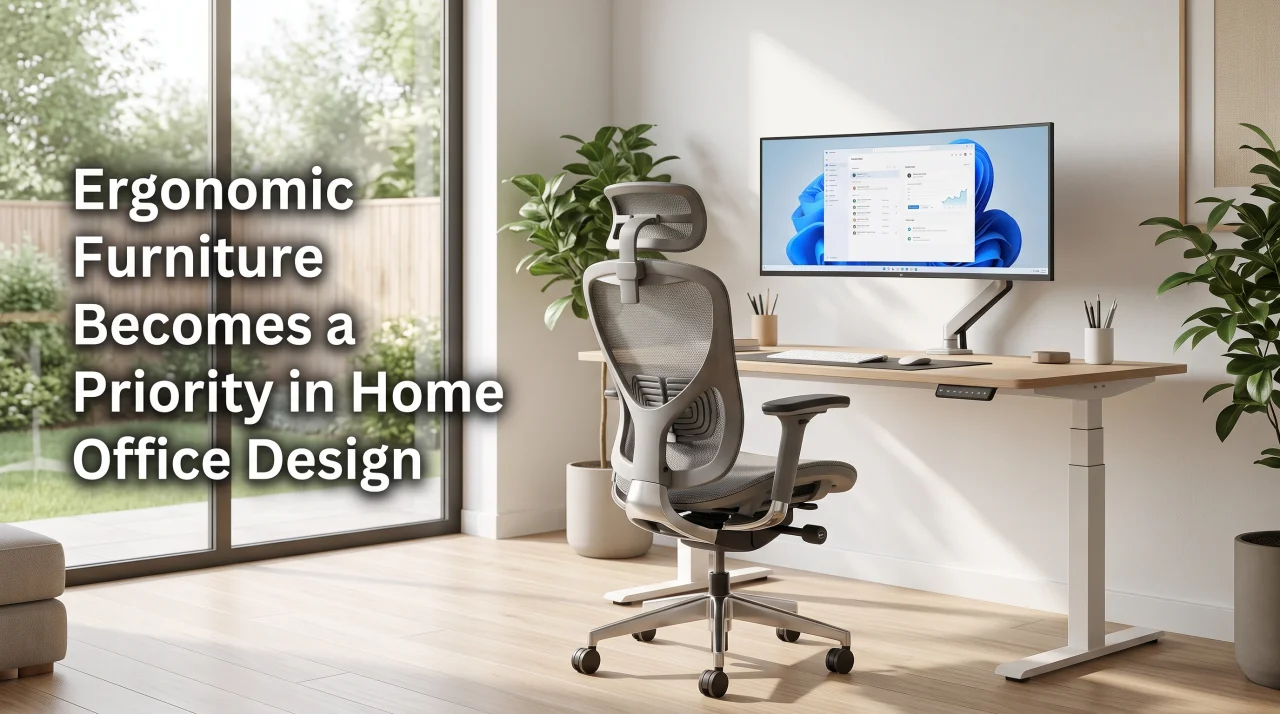
- Height-adjustable desks with memory settings
- Smart beds that monitor sleep quality
- Coffee tables with wireless charging
- Sofas featuring integrated USB-C charging ports
- Cabinets with sensor-activated lighting
- Mirrors with digital displays and environmental information
These innovations improve convenience while maintaining clean and minimalist aesthetics.
Intelligent Lighting Systems
Lighting has become one of the most advanced technological components of interior architecture.
Modern smart lighting systems can automatically adjust brightness and color temperature based on the time of day, user activity, or natural daylight availability.
For example, cooler white light may improve concentration in a home office, while warmer tones create a relaxing atmosphere in living rooms and bedrooms during the evening.
This adaptability enhances both comfort and energy efficiency.
Digital Twins in Interior Design
One of the newest technologies entering interior architecture is the digital twin.
A digital twin creates a virtual replica of an interior space, allowing designers to test lighting, furniture layouts, HVAC performance, and material selections before construction begins.
Building owners can also use digital twins to monitor energy consumption, maintenance requirements, and space utilization throughout the building's lifecycle.
Sustainability Through Smart Technology
Technology is also helping designers create more sustainable interiors.
Smart sensors can automatically reduce lighting and air conditioning in unused spaces, while energy monitoring systems help homeowners understand and optimize their daily consumption.
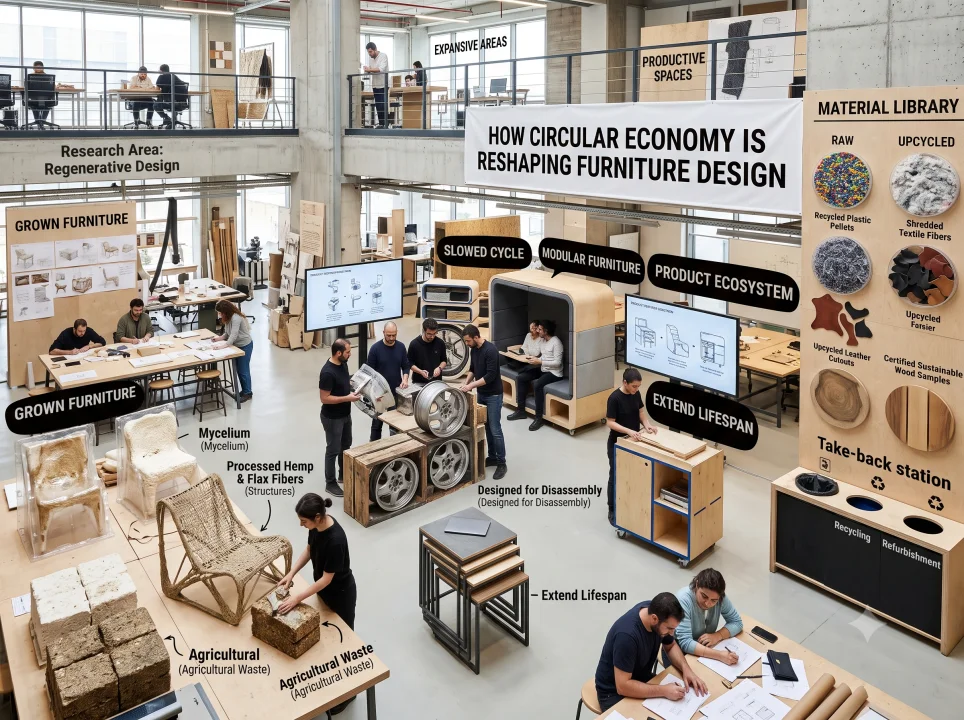
Furniture manufacturers are increasingly using digital production technologies to minimize waste and improve material efficiency, contributing to more environmentally responsible design practices.
Human-Centered Design Meets Technology
Despite rapid technological advancement, successful interior architecture continues to focus on people.
The best smart interiors do not overwhelm users with technology. Instead, automation operates quietly in the background, improving comfort without distracting from the overall design.
This human-centered approach ensures that technology supports daily life rather than complicating it.
The Future of Interior Architecture
The next generation of interiors is expected to become even more adaptive.
Artificial intelligence may automatically rearrange lighting scenes according to personal routines, while robotic furniture could transform spaces from living rooms into home offices within minutes. Smart materials capable of changing opacity, texture, or thermal performance are also under development.
As these innovations mature, interior architecture will increasingly combine physical design with intelligent digital systems, creating environments that continuously respond to the people who use them.
Technology is fundamentally changing the relationship between people and interior spaces. From AI-assisted planning and connected furniture to intelligent lighting and digital twins, modern interiors are becoming more responsive, efficient, and personalized than ever before.
As innovation continues to shape the future of design, FurniPress remains committed to exploring the technologies that are transforming interior architecture and furniture, helping professionals and design enthusiasts stay ahead of the industry's most important developments.