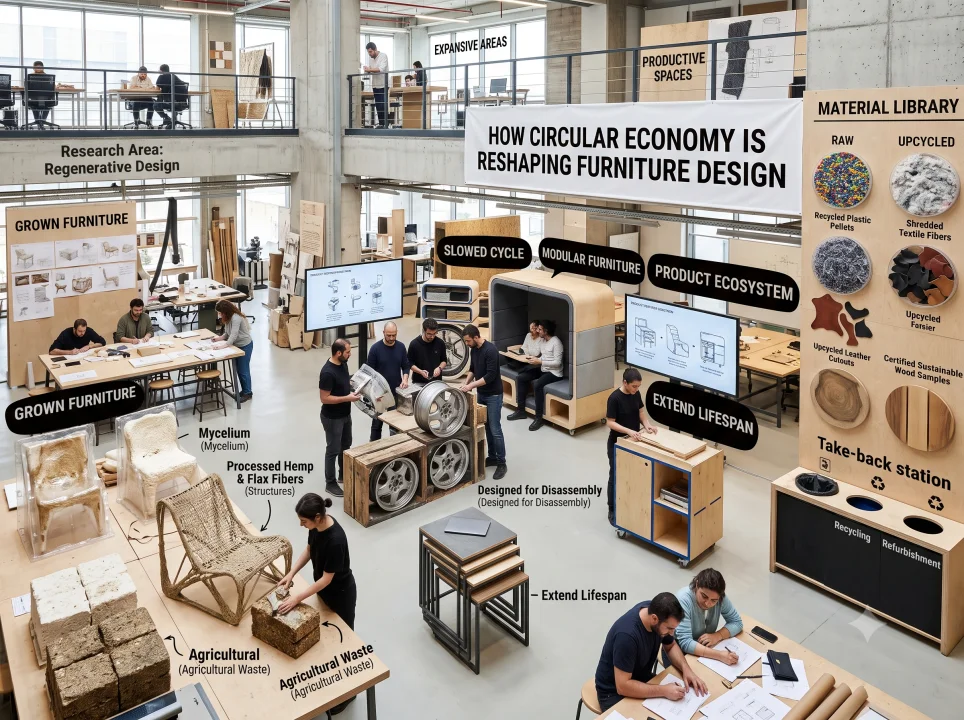
The furniture industry is undergoing a significant transformation as sustainability becomes a central focus for manufacturers, designers, and consumers. Rather than following the traditional "make, use, dispose" model, companies are increasingly embracing the principles of the circular economy—a system designed to minimize waste and maximize the value of materials throughout a product's lifecycle.
As highlighted by FurniPress, circular economy strategies are influencing every stage of furniture production, from material sourcing to product design and end-of-life recycling.
Understanding the Circular Economy
A circular economy is based on keeping products and materials in use for as long as possible. Instead of discarding furniture after years of use, products are designed to be repaired, refurbished, remanufactured, or recycled.
This approach reduces environmental impact while creating more efficient manufacturing systems and encouraging responsible consumption.
Designing Furniture for Longevity
One of the key principles of circular furniture design is durability.
Manufacturers are focusing on stronger construction methods, timeless aesthetics, and replaceable components that allow furniture to remain functional for decades. Products designed with longevity in mind reduce the need for frequent replacement and help conserve natural resources.
Recyclable and Renewable Materials
Material selection plays a crucial role in circular manufacturing.
Furniture companies are increasingly using:
- FSC-certified wood
- Recycled aluminum
- Recycled plastics
- Bamboo
- Cork
- Natural fibers
- Bio-based composite materials
These materials reduce dependence on virgin resources while supporting more sustainable production practices.
Modular Design Supports Reuse
Modular furniture aligns naturally with circular economy principles.
Instead of replacing an entire product, users can upgrade or replace individual modules when their needs change. A sectional sofa can be expanded, a shelving system can grow, and storage units can be reconfigured without generating unnecessary waste.
This adaptability extends product life while providing greater flexibility for consumers.
Furniture Repair and Refurbishment
Many manufacturers are reintroducing repair services and refurbishment programs.
Replacing upholstery, refinishing wooden surfaces, or upgrading hardware allows furniture to remain in use for many additional years. These services reduce landfill waste while preserving the craftsmanship of high-quality products.
Consumers are increasingly recognizing the value of maintaining furniture rather than replacing it.
Digital Technologies Improve Sustainability
Technology is helping manufacturers implement circular practices more effectively.
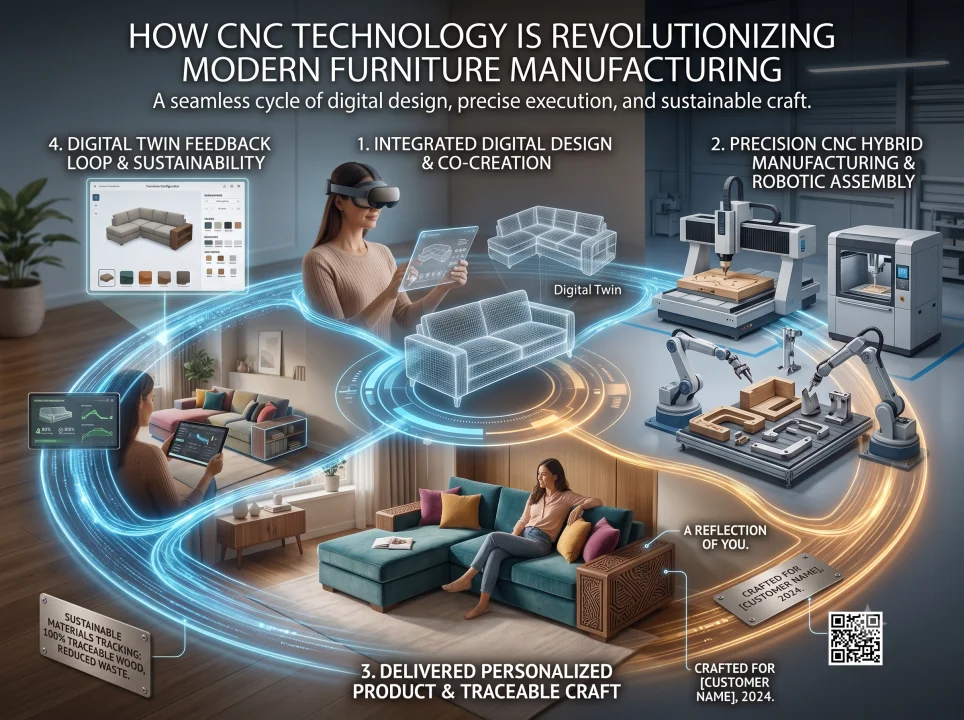
Digital product passports, material tracking systems, and advanced inventory management allow companies to monitor the origin, composition, and future recyclability of furniture components.
These tools improve transparency and make recycling processes more efficient.
Consumer Demand Is Driving Change
Today's buyers are paying greater attention to environmental responsibility.
Many consumers now evaluate furniture based not only on appearance and price but also on durability, repairability, and sustainable sourcing. This shift is encouraging brands to invest in circular business models that prioritize long-term value over short-term consumption.
Looking Ahead
The future of furniture manufacturing is expected to become increasingly circular.
Designers will continue developing products that are easier to disassemble, recycle, and repair. Manufacturers are also exploring leasing models, furniture buy-back programs, and closed-loop production systems that keep valuable materials in circulation for longer periods.
These innovations will help create a furniture industry that is both environmentally responsible and economically resilient.
Circular economy principles are redefining how furniture is designed, manufactured, and used. By prioritizing durability, modularity, sustainable materials, and product longevity, the industry is moving toward a future where waste is minimized and resources are used more responsibly.
As sustainability continues to shape the global furniture market, FurniPress remains committed to covering the innovations and ideas driving this transition toward smarter and more circular design.