
The sofa is one of the most important furniture investments in a living room. It influences the appearance of the space, determines how people use the room, and often remains in the home for many years.
For this reason, evaluating a sofa requires more than judging its appearance. Construction quality, comfort, upholstery, proportions, and long-term durability should all be considered before making a decision.
Construction Determines Longevity
A sofa's internal structure is one of the most important indicators of quality.
A well-constructed frame should provide stability and maintain its shape through regular use. The quality of joints, support systems, and structural components can significantly influence the lifespan of the product.
For buyers, a sofa that feels solid and stable is generally a better starting point than one that relies primarily on visual appeal.
Comfort Depends on More Than Softness
A comfortable sofa does not necessarily have to be extremely soft.
Seat depth, cushion density, back support, armrest height, and overall proportions all influence how a sofa feels when used for extended periods.
Different users may also have different preferences, which makes testing a sofa in person particularly valuable.
Upholstery Affects Everyday Performance
The upholstery material influences both appearance and practicality.
Natural fabrics can provide a warm and tactile appearance, while performance fabrics may offer greater resistance to stains and everyday wear. Leather and other durable materials can also provide long-term performance when properly maintained.
The best choice depends on how frequently the sofa will be used and the requirements of the household.
Proportion Matters in Interior Design
Even a high-quality sofa can feel unsuitable if its dimensions are not appropriate for the room.
Before purchasing, buyers should consider the width, depth, height, and relationship between the sofa and surrounding furniture.
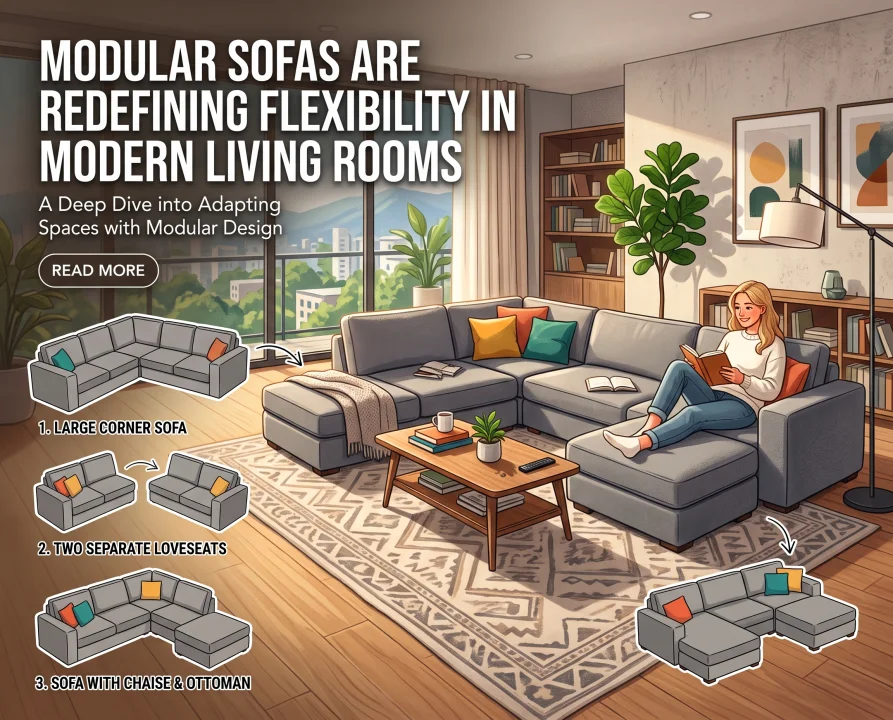
In smaller interiors, compact or modular sofas can provide seating without overwhelming the available space.
Modular Sofas Offer Flexibility
Modular designs have become increasingly popular because they can adapt to changing needs.
Individual sections can sometimes be rearranged or expanded, allowing the sofa to change as the room or household evolves.
This flexibility can also make modular furniture a practical option for people who move frequently.
Design Should Remain Relevant
A sofa is often a long-term purchase, so choosing a design that can remain visually relevant is important.
Neutral upholstery, balanced proportions, and timeless silhouettes can make it easier to update the surrounding interior without replacing the sofa itself.
This does not mean avoiding distinctive designs. Instead, the goal is to consider whether the product can continue working with different interior styles.
Overall Value Is More Than Price
A lower purchase price does not necessarily mean better value.
Buyers should consider construction quality, expected lifespan, maintenance requirements, comfort, and warranty conditions alongside the initial cost.
A well-made sofa that remains comfortable and functional for many years can provide greater value than a cheaper product that requires earlier replacement.
Reviewing a sofa properly requires looking beyond photographs and first impressions.
Construction, comfort, upholstery, proportions, flexibility, and long-term value all contribute to the overall quality of the product.
For consumers and interior professionals, understanding these factors makes it easier to evaluate sofas based on performance as well as aesthetics.