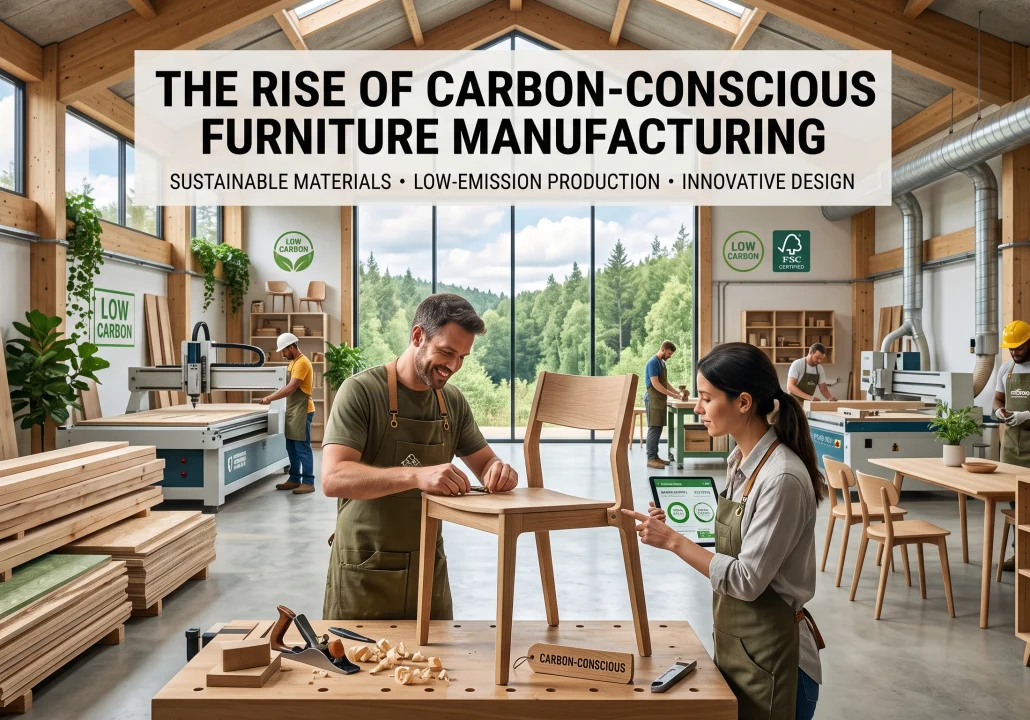
Reducing carbon emissions has become one of the biggest priorities across the global furniture industry. Manufacturers are no longer focusing solely on product quality and design; they are also evaluating how their operations affect the environment.
Carbon-conscious manufacturing is emerging as a key strategy for companies looking to reduce emissions throughout the production process while meeting the growing expectations of environmentally aware consumers.
Cleaner Manufacturing Processes
Furniture factories are investing in energy-efficient machinery, optimized production lines, and renewable energy sources to lower emissions.
These improvements not only reduce environmental impact but can also improve operational efficiency and lower long-term production costs.
Material Selection Makes a Difference
Choosing responsibly sourced wood, recycled metals, and recycled plastics helps reduce the environmental footprint of furniture production.
Manufacturers are also replacing traditional chemical finishes with lower-emission alternatives that improve indoor air quality.
Measuring Environmental Impact
Many companies now calculate the carbon footprint of their products throughout their lifecycle.
From raw material sourcing to transportation and end-of-life recycling, understanding environmental impact helps manufacturers make better production decisions.
Carbon-conscious manufacturing is expected to become a competitive advantage as sustainability standards continue to evolve.
Companies that successfully combine design excellence with environmental responsibility will likely strengthen their position in global markets.