
The penultimate week of January 2026, spanning from the 19th to the 25th, served as a defining period for the global furniture and interior design sectors. This interval, situated precisely at the intersection of the European trade fair calendar's closure and the North American market's opening, illuminated a profound structural divergence within the industry. We are witnessing a bifurcation where the "middle" of the market is rapidly eroding, giving way to a polarized landscape defined by hyper-specialized luxury on one end and technologically integrated, logistics-heavy mass market operations on the other.
- 1. Executive Overview: A Week of Structural Divergence
- 2. The European Trade Fair Circuit: Defining the 2026 Aesthetic
- 3. The North American Market: Las Vegas Market & Retail Shifts
- 4. Global Supply Chain & Economic Policy
- 5. Technology: The AI Implementation Gap
- 6. Sustainability: From Recyclable to Durable
- 7. Corporate Finance & Earnings Outlook
- 8. Conclusion and Future Outlook
1. Executive Overview: A Week of Structural Divergence
As the industry gathered in Germany for the conclusion of IMM Cologne and in France for the final days of Maison & Objet, the aesthetic consensus solidified around "Soft Contract"—a definitive blurring of residential and commercial design languages driven by the permanent entrenchment of hybrid work models. Simultaneously, the North American sector prepared for the Las Vegas Market, buoyed by a significant, albeit temporary, reprieve in trade policy: the delay of escalated U.S. tariffs on furniture imports until 2027.
However, the week's most stark contrast was found in the retail ecosystem. While American Signature Inc., a 78-year-old pillar of the U.S. furniture establishment, commenced total liquidation of its remaining 89 stores following a bankruptcy filing , digital-native giant Wayfair and global hegemon IKEA aggressively expanded their brick-and-mortar footprints with new large-format and consultation-based stores across the United States. This juxtaposition signals the endgame of the "Retail Apocalypse" for legacy players who failed to bridge the digital-physical divide, while marking the dawn of a new era of "Retail Renaissance" for those who control their own logistics and data stacks.
Supply chain dynamics remained volatile yet momentarily favorable for importers, with the Drewry World Container Index dropping 10% this week. Yet, this softening in freight rates masked underlying inflationary pressures in raw materials, particularly in the Chinese manufacturing sector , and the growing complexity of compliance with the European Union's Deforestation Regulation (EUDR).
This comprehensive report analyzes these developments through the lenses of design innovation, economic policy, supply chain logistics, and corporate strategy, offering a detailed roadmap of the industry's trajectory in early 2026.
2. The European Trade Fair Circuit: Defining the 2026 Aesthetic
The global design dialogue for the first half of 2026 was largely scripted in Cologne and Paris this week. The two fairs, while geographically close, highlighted different facets of the industry's evolution: IMM Cologne focused on the pragmatic restructuring of the workspace, while Maison & Objet championed the emotional and artistic transformation of the home.
2.1 IMM Cologne 2026: The Era of "Soft Contract"
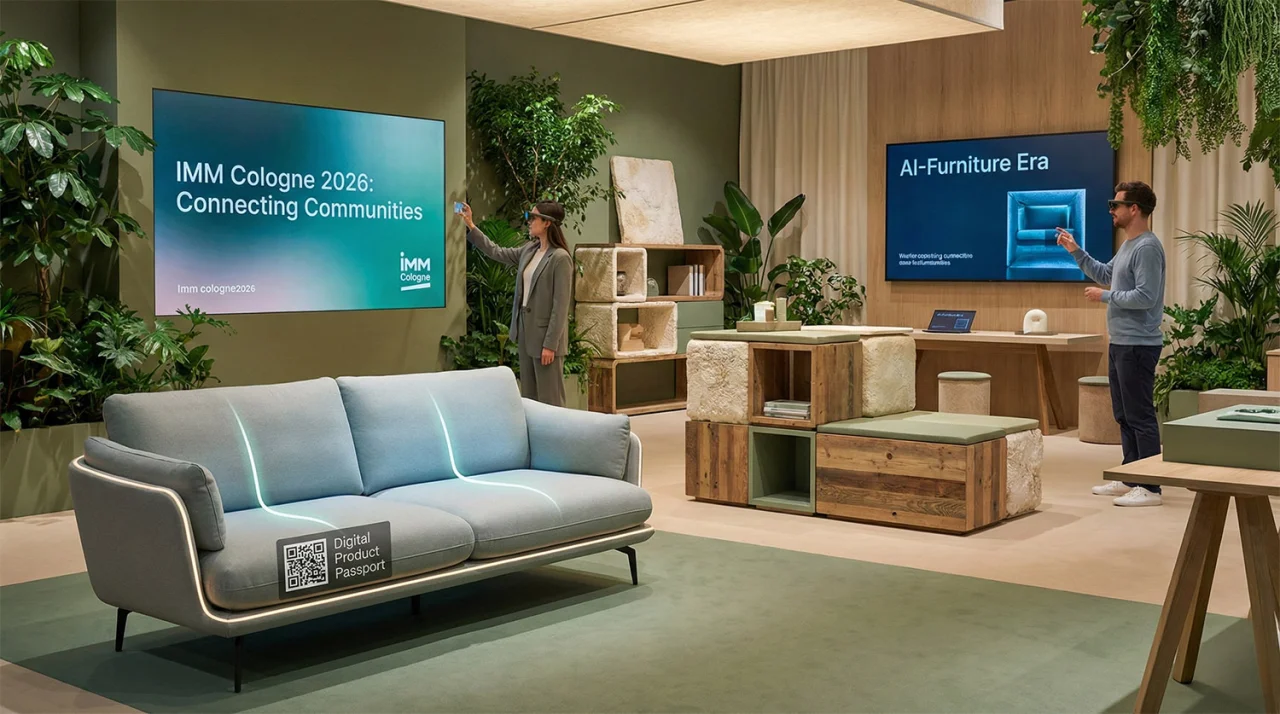
Held from January 20 to 23, 2026, IMM Cologne underwent a significant strategic pivot, rebranding itself under the "World of Interiors" theme and shifting to a B2B-only format designed to maximize efficiency for high-volume buyers. The fair hosted 339 exhibitors from 28 countries, a compact but highly focused roster that catered primarily to the mid-market and entry-level price segments.
2.1.1 The Death of the Bench and the Rise of Micro-Architecture
The most pervasive trend identified at IMM Cologne was the solidification of "Soft Contract" as the dominant design paradigm for commercial spaces. This trend transcends the superficial "resimercial" aesthetics of previous years—which often merely involved putting colorful cushions on office chairs—and moves toward a fundamental restructuring of the office landscape.
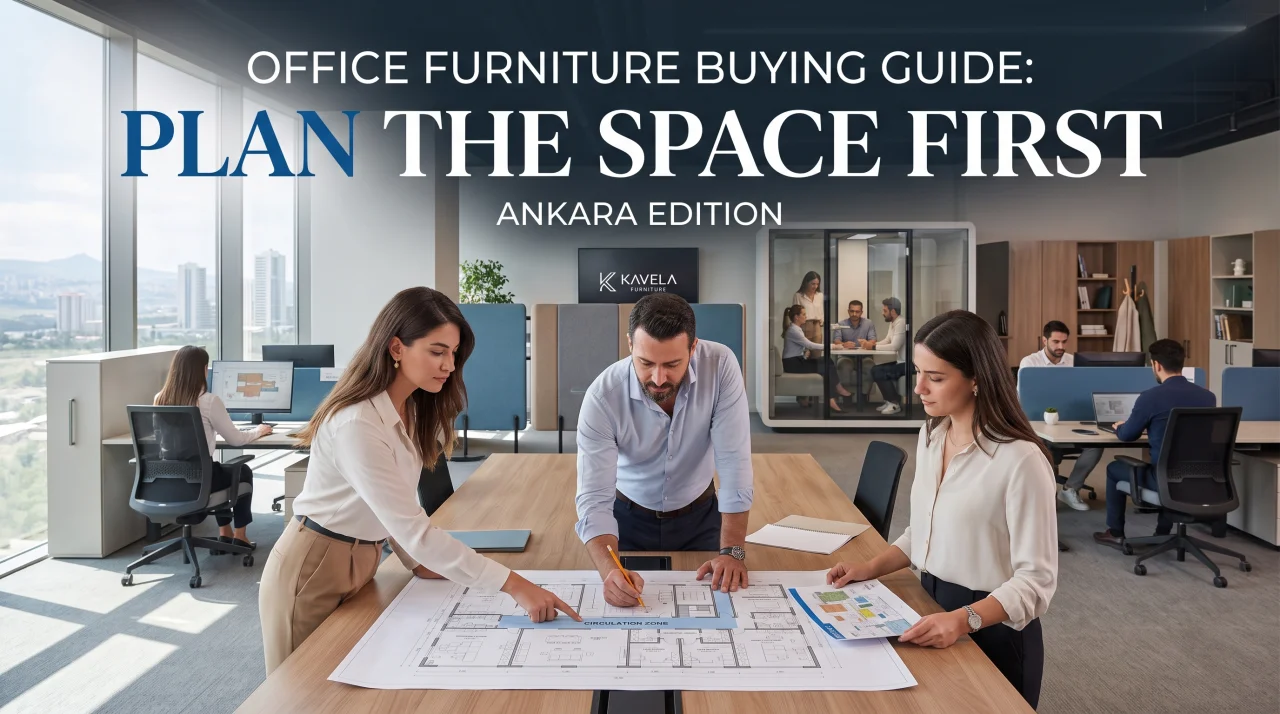
The traditional "benching system"—long rows of open desks that defined the tech-boom office—is effectively dead, replaced by "micro-architectural" furniture. This shift is driven by findings from organizations like CoreNet Global, which highlight the critical deficit of privacy in open-plan environments. In response, manufacturers at IMM showcased high-backed sofas, acoustic pods, and enclosed booth systems that create "rooms within rooms". These structures allow for deep work and confidential communication without the need for permanent wall construction.
Key Design Features of Soft Contract:
Warm Minimalism: The material palette has shifted decisively. Cold laminates, chrome, and synthetic mesh are being ousted by oak, felt, and wool. This "Warm Minimalism" is intended to reduce cortisol levels and mimic the comfort of the residential environment workers grew accustomed to during remote work phases.
Agile Privacy: Mobile partitions and acoustic screens mounted on wheels were ubiquitous. These allow teams to instantly reconfigure a space from an open collaboration zone to a segmented private area, reflecting the agile nature of modern project management.
Stealth Technology: Power integration has matured. Rather than visible plastic grommets or clunky power strips, charging capabilities are now woven into the seams of lounge seating or hidden beneath the surfaces of timber communal tables.
2.1.2 The "Transformer" Furniture for Urban Density
Reflecting the global crisis in urban housing affordability and space, IMM Cologne highlighted a resurgence in multifunctional furniture. The standout typology was the convertible table—units engineered to serve as ergonomic workstations during the day and expand into dining surfaces for four to six people in the evening.
Similarly, the sofa bed has been reinvented. No longer an uncomfortable compromise, the 2026 generation of sleeper sofas integrates substantial storage for bedding and utilizes advanced memory foam mattresses that rival dedicated beds. MX DREAM, a featured exhibitor, showcased a "Multifunctional Sofa System" that transitions seamlessly between three states: a sleek sofa for reception or living areas, a daybed for lounging, and a full-size bed for guests. This modularity addresses the "poverty of space" in metropolitan centers, enabling a single room to function as a home office, living room, and guest bedroom within a 24-hour cycle.
2.2 Maison & Objet Paris: "Past Reveals Future"
Running through January 19, 2026, the January edition of Maison & Objet (M&O) at Paris Nord Villepinte set the emotional tone for the year with its theme "Past Reveals Future". This theme challenged designers to treat history not as a static archive to be preserved behind glass, but as a living source of raw material for contemporary reinvention.
2.2.1 Harry Nuriev and the Philosophy of "Transformism"
The fair's narrative was anchored by the selection of Harry Nuriev as Designer of the Year. Nuriev, the Russian-born founder of Crosby Studios, is the figurehead of a movement he calls "Transformism." His approach involves reimagining everyday objects—often discarded or overlooked items—as high-concept art and functional design.
Nuriev's installation at the fair was a masterclass in this philosophy. He presented a room clad entirely in silver-toned materials, creating a space that felt simultaneously brutalist and futuristic. This use of silver and metallic finishes serves as a physical manifestation of the digital world, blurring the boundaries between physical furniture and the "metaverse" aesthetics that have permeated design culture. Nuriev’s work acts as "design anthropology," offering a singular response to a world saturated with images and data by creating spaces that are visually quiet yet conceptually loud.
2.2.2 The "Curatio" Collectible Design Village
A significant innovation for the 2026 edition was the introduction of Curatio, a dedicated "village" within the fair curated by German designer Thomas Haarmann. This section featured a gallery-style environment showcasing 60 works that championed the "art of rarity."
The success of Curatio signals a growing market for "collectible design"—pieces that sit at the intersection of functional furniture and fine art. These items are increasingly sought after by luxury hospitality projects and high-net-worth collectors who wish to differentiate their spaces from the homogeneity of mass-market luxury. Haarmann’s curation emphasized a "refined brutality," selecting pieces that highlighted the raw, imperfect nature of their materials while demonstrating exquisite craftsmanship.
2.2.3 "In Materia" and the Return to Earth
Providing a sensory counterpoint to Nuriev’s digital-silver aesthetic was the "In Materia" installation by trend forecaster Elizabeth Leriche. Organized around elemental themes—‘Germa’ (Germination), ‘Terra’ (Earth), ‘Fusio’ (Fusion), and ‘Crypta’ (Crypt)—the exhibit explored the primal qualities of natural materials.
This installation underscored a trend toward "Crafted Irregularity." In an age of AI-generated perfection, consumers are craving objects that bear the mark of the human hand. The installation featured ceramics with uneven glazes, woods with visible knots and grain, and textiles with slubbed, organic textures. It is a celebration of the "poetry of craftsmanship" and material transformation.
Notable Product Launches at Maison & Objet:
| Brand | Product Name | Designer | Description & Trend Alignment | Source |
|---|---|---|---|---|
| Imperfettolab | Matau | Verter Turroni | A fiberglass hammock-like seat that blurs the line between sculpture and furniture. Represents the trend of Sculptural Lightness. | |
| Pulpo | K-Table | Kai Linke | Tables constructed from hot-dipped galvanized structural steel I-beams. Represents Industrial Brutalism. | |
| Ango | Bounded | Angus Hutheson | Lighting made from mulberry fiber and natural polymers, tied with jute. Represents Neo-Folklore and bio-materials. | |
| Uniqka | Borgona | Various | A collection featuring the Betsy stool and Silos tables, all drenched in a deep burgundy hue. Highlights the Color Trend: Deep Reds/Burgundy. | |
| Laufen | Volta | Yves Béhar | A washbasin collection debuting at the fair, showcasing fluidity and geometry in bathroom design. |
2.3 Heimtextil 2026: The Intersection of Craft and AI
Though concluding slightly earlier in the month (January 13-16), the impact of Heimtextil 2026 in Frankfurt continued to resonate this week as analysts digested its key trend: "Craft is a Verb".
The fair’s Trend Arena, located in Hall 6.1, juxtaposed traditional craftsmanship with AI-driven design tools. The central thesis was that these two forces are not contradictory but complementary. AI is being used to generate new color palettes and optimize weaving patterns, while human craft provides the tactile intuition and irregularity that gives a product its soul. This "co-working" between human hands and machine learning was visually represented in installations that paired handmade fiber art with digital screens displaying futuristic home concepts.
3. The North American Market: Las Vegas Market & Retail Shifts
As the European fairs wound down, the global focus shifted to the United States, where the Las Vegas Market (LVM) prepared to open its doors on January 25, 2026. This transition occurred against a backdrop of seismic shifts in the US retail landscape.
3.1 Las Vegas Market Winter 2026: Preview & Trends
The Winter 2026 edition of the Las Vegas Market, running from January 25 to 29, is positioned as the premier sourcing event for the western United States, hosting over 3,500 brands across furniture, home décor, and gifts.
3.1.1 The Vacation Rental Design Summit (VRDS)
A critical development for this market cycle is the partnership with the Vacation Rental Design Summit (VRDS), which launched its first West Coast edition in conjunction with LVM on January 24. This highlights the growing economic power of the short-term rental sector (Airbnb, Vrbo). Furnishing a vacation rental requires a specific set of criteria—high durability, stain resistance, "Instagrammability," and quick replacement timelines—that differs from both standard residential and commercial specifications. The presence of VRDS at LVM signals that manufacturers are now creating dedicated product lines to serve this "host economy."
3.1.2 Aesthetic Trend: "Restorative Softness"
Pre-market trend reports and the "Market Snapshot" voting patterns indicate a strong buyer preference for "Restorative Softness". In a world perceived as chaotic and unstable, the American consumer is seeking to turn the home into a sanctuary.
This trend is characterized by:
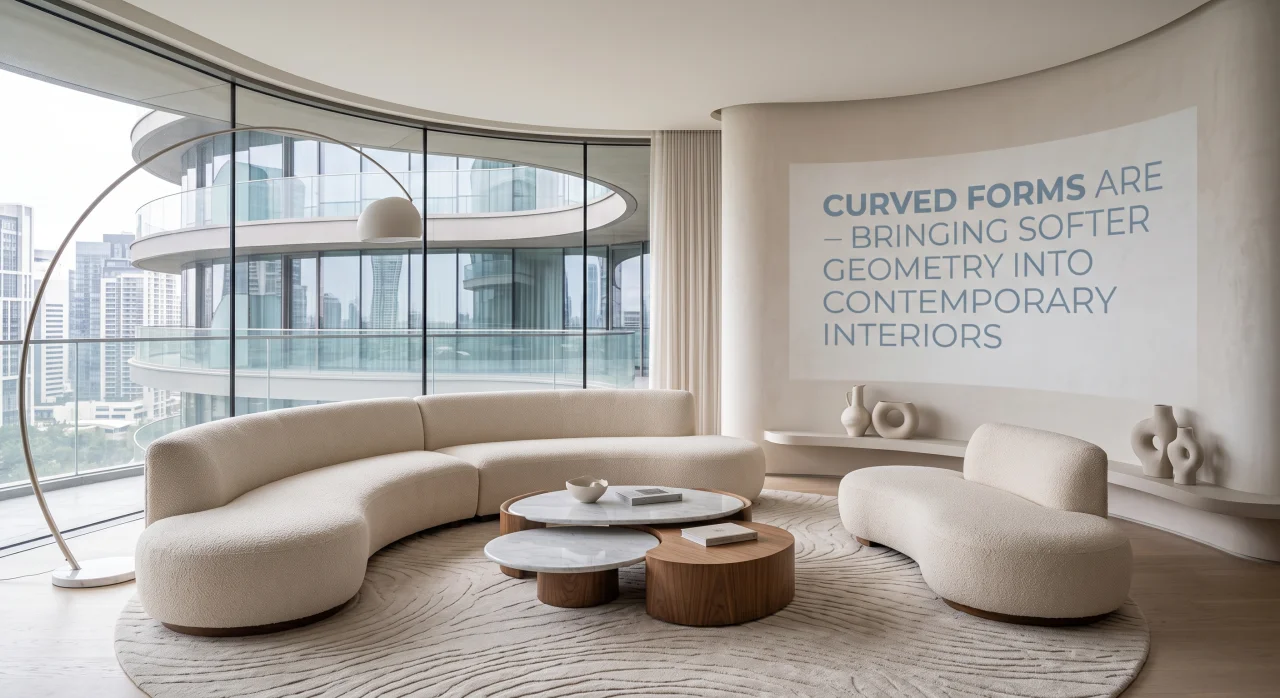
Soft Lines and Forms: A rejection of sharp angles in favor of curved sofas, rounded ottomans, and organic coffee tables.
Lush Textiles: A heavy reliance on tactile fabrics like boucle, velvet, and shearling.
Full Silhouettes: Furniture that looks "plump" and overstuffed, conveying a visual sense of comfort before one even sits down.
Key exhibitors driving this trend include Bernhardt Furniture, Four Hands, Amity Home, and Meridian Furniture, all of whom have been highlighted in the pre-market voting for their contributions to this aesthetic.
3.2 The Retail Apocalypse: The Collapse of American Signature Inc.
In a sombre development that shook the industry this week, American Signature Inc. (ASI), the parent company of Value City Furniture and American Signature Furniture, entered the final stages of its existence. Following a Chapter 11 bankruptcy filing in November 2025, the company announced the total liquidation of its remaining 89 stores across 13 states.
3.2.1 Anatomy of a Failure
ASI's collapse is a textbook example of the "squeezed middle." The company, founded 78 years ago, failed to navigate the "prolonged decline in furniture demand" caused by the stagnant US housing market and persistent inflation.
Financial Collapse: Net sales plummeted by nearly $150 million between 2024 and 2025, leading to widening operating losses that became unsustainable.
Strategic Missteps: Unlike competitors who pivoted to strong e-commerce models or distinct niche branding, ASI remained a traditional brick-and-mortar operation dependent on mid-market volume. In an economy where consumers either trade down to IKEA/Amazon or trade up to Restoration Hardware/Arhaus, the undifferentiated middle ground proved fatal.
Liquidation Scale: A joint venture led by SB360 Capital Partners, Hilco Global, and Gordon Brothers is conducting the closing sales, with discounts of up to 50% aimed at clearing inventory immediately.
3.3 The Retail Renaissance: Wayfair and IKEA Expand
In stark contrast to ASI's demise, digital-native and global giants are aggressively expanding their physical footprints, validating the "omnichannel" thesis.
3.3.1 Wayfair's Physical Pivot
Wayfair, the e-commerce titan, announced the opening of a new 140,000-square-foot large-format store in Denver, Colorado, scheduled for late 2026, alongside another location in Atlanta.
The "Halo Effect": Wayfair's strategy is driven by data showing that opening a physical store boosts online sales in the surrounding region by over 15%. The store acts as a billboard, a trust-builder, and a logistics node.
Logistics Integration: The new Atlanta store is strategically located near a Wayfair fulfillment center in McDonough, GA. This proximity allows for the expedited delivery of large furniture items—a critical competitive advantage over traditional retailers who often struggle with last-mile logistics.
3.3.2 IKEA's Format Diversification
IKEA continued its aggressive US expansion with a diversified portfolio of store formats aimed at increasing accessibility.
Plan and Order Points: The company announced new "Plan and order points with Pick-up" in Media, Pennsylvania, and South Bay, California. These smaller stores (approx. 2,400–3,700 sq. ft.) focus on complex purchases like kitchen and bathroom remodels, offering expert consultation rather than the traditional cash-and-carry maze.
New Large Format: IKEA also confirmed a traditional large-format store for Huntsville, Alabama, to open in 2026 , proving that the big-box model still has relevance in specific underserved markets.
Circular Economy: IKEA continues to push its "Buy Back & Resell" program and "As-Is" online service, appealing to value-conscious consumers and positioning the brand as a leader in sustainability.
4. Global Supply Chain & Economic Policy
The week was defined by critical shifts in trade policy and logistics that will determine the cost baseline for the industry in 2026.
4.1 The Tariff Reprieve: A Strategic Pause
On the policy front, the U.S. government announced a delay in the escalation of tariffs on imported furniture from China until 2027. The tariffs on upholstered furniture, kitchen cabinets, and vanities were set to increase from 25% to 30% (and up to 50% for some categories) on January 1, 2026.
Strategic Implications:
Short-Term Relief: This delay provides breathing room for importers who were bracing for a massive cost hike. It may allow for some stabilization in retail pricing during the first half of 2026.
Long-Term Uncertainty: However, industry leaders warn that "tariff-trauma" continues to complicate long-term planning. The delay is not a cancellation; it is a pause. Companies are advised to "hedge their bets" by continuing to diversify supply chains away from China to mitigate the risk of the hike eventually taking effect in 2027.
4.2 Freight Rates: A Deceptive Dip
The global logistics market showed signs of softening this week. The Drewry World Container Index (WCI) decreased by 10% to $2,212 per 40ft container as of January 22, 2026.
Specific Route Data (Jan 22, 2026):
Shanghai to Los Angeles: Dropped 12% to $2,546.
Shanghai to New York: Dropped 11% to $3,191.
Shanghai to Rotterdam: Dropped 9% to $2,510.
Shanghai to Genoa: Dropped 8% to $3,520.
Analysis: While a 10% drop appears positive for shippers, it must be contextualized. Rates had spiked earlier in January due to geopolitical instability in Venezuela and continued diversions from the Red Sea. The current dip likely reflects a post-holiday demand lull before the Lunar New Year shutdown. Logistics experts advise that despite this spot rate volatility, the structural risks to the supply chain remain high, and shippers should prioritize securing reliability over chasing the lowest possible spot rate.
4.3 Manufacturing Hubs: Vietnam vs. China
The divergence between the world's two primary furniture factories continues to widen.
Vietnam's Ascent: Vietnam has solidified its position as the primary alternative to China. In 2025, its wood and wood product exports hit a record $17.2 billion, a 6% increase year-over-year. Crucially, the US market now accounts for 55% of Vietnam's total timber exports ($9.46 billion). In the first eight months of 2025, Vietnam's share of US wooden furniture imports rose to 45.3%, while China's share collapsed to 10.4%.
China's Pivot: Facing these headwinds, Chinese manufacturers are pivoting. Domestic demand is weak, with Markor Furniture and IKEA China announcing store closures and production halts. However, Chinese firms are moving up the value chain into high-tech smart home products (like Dreame Technology) and investing in compliance. Stellar Furniture, a leading office furniture manufacturer in Foshan, announced full compliance with the EU Deforestation Regulation (EUDR) this week. This complex certification involves geolocation tracking of timber sources, positioning Stellar as a "safe" supplier for European buyers despite the geopolitical friction.
5. Technology: The AI Implementation Gap
The conversation around Artificial Intelligence in the furniture industry shifted this week from theoretical design applications to practical manufacturing realities.
5.1 The Manufacturing Reality Check
A major report released by Redwood Software on January 20, 2026, highlighted a critical "Implementation Gap" in the sector.
- The Interest: 98% of manufacturers are exploring or considering AI-driven automation.
- The Reality: Only 20% feel fully prepared to use it at scale.
- The Bottleneck: Automation is stalling at system boundaries. While individual machines are automated, the data flow between ERP systems, shipping logistics, and inventory management remains fragmented and manual. The report suggests that the immediate ROI for AI in 2026 will come not from generative design, but from automating "boring" processes like exception handling and data transfer to reduce unplanned downtime.
5.2 Consumer-Facing AI
On the retail side, Wayfair announced a strategic partnership with Google to advance AI-powered shopping for the home. This collaboration is expected to leverage Google's Lens and generative AI capabilities to allow customers to search for furniture using images and visualize products in their homes with unprecedented fidelity.
5.3 Product Innovation: The "Active" Chair
At IMM Cologne, the brand VivaNova, backed by Lumos Robotics, debuted the Viva Series ergonomic chair. This product represents the transplanting of "Perception-Decision-Execution" algorithms from humanoid robotics into furniture. Unlike a traditional ergonomic chair that provides passive support, the Viva chair uses sensors and motors to actively adapt to the user's posture in real-time. This marks the beginning of a new category of "Active Health" furniture that interacts dynamically with the human body.
6. Sustainability: From Recyclable to Durable
The definition of "sustainability" in the furniture sector is undergoing a maturation process in 2026. The focus has shifted from "recyclability" (what happens at the end of life) to "durability" (extending the useful life).
- "Longevity is the New Sustainability": This was the prevailing mantra in the contract furniture sector this week. Commercial buyers are increasingly rejecting "fast furniture" in favor of pieces with replaceable components and 10+ year warranties.
- Material Innovation: CF Stinson was celebrated for its Bloomscape collection, which won the Nightingale Best of Sustainability Award. The collection utilizes biodegradable vinyl technology and privacy curtains made from recycled marine plastic, proving that healthcare textiles can meet rigorous sanitation standards while being environmentally responsible.
- Bio-Materials: The partnership between Spanish furniture brand Sancal and material innovator Ohoskin was highlighted as a key development. Ohoskin creates a leather alternative from orange byproducts and cacti. By using this material, Sancal is validating the commercial viability of circular bio-materials in high-end design furniture.
7. Corporate Finance & Earnings Outlook
As the industry prepares for the Q4 2025 earnings season, the financial markets are signaling cautious optimism for select players.
- Wayfair (NYSE: W): The company is scheduled to release its Q4 results on February 19, 2026. Investor sentiment appears bullish, with the stock hitting a new 12-month high on January 13. This confidence is likely driven by the success of its cost-cutting measures and the promising early data from its physical retail expansion.
- Hooker Furnishings (NASDAQ: HOFT): The company continues to navigate a restructuring phase. While its "Hooker Branded" segment broke even, the company is actively reducing fixed costs to align with the lower revenue environment caused by the housing stagnation.
- Bankruptcy Ripple Effects: The liquidation of American Signature Inc. is expected to release a significant amount of inventory into the market at distressed prices, which may temporarily depress margins for competitors in the key markets of Florida and the Midwest during Q1 2026.
8. Conclusion and Future Outlook
The week of January 19–25, 2026, provided a clear snapshot of an industry in transition. The era of the "generalist" furniture retailer is effectively over. The market is rewarding two distinct strategies: Hyper-Efficiency (Wayfair, IKEA, Vietnam manufacturing) and Hyper-Specialization (M&O's collectible design, soft contract innovators).
Key Takeaways for Industry Stakeholders:
- Adapt to Soft Contract: The office is not returning to its pre-2020 state. Furniture manufacturers must pivot to "micro-architectural" solutions and residential aesthetics to capture the commercial market.
- Invest in "Invisible Tech": Whether in manufacturing (supply chain automation) or product design (hidden charging, active ergonomics), technology must be seamless and omnipresent.
- Diversify Supply Chains: The tariff delay is a strategic window, not a permanent solution. Reliance on China remains a high-risk strategy, and the migration to Vietnam and India must continue.
- Embrace Omnichannel: The contrast between American Signature's failure and Wayfair's expansion proves that physical retail is not dead—but unconnected physical retail is. Stores must function as data-gathering logistics hubs to survive.
As the industry moves into February, all eyes will be on the Las Vegas Market to see if the "Restorative Softness" trend translates into actual order volume, and whether the US housing market will show any signs of a spring thaw to support the beleaguered residential furniture sector.
Table 1: Key Furniture Industry Metrics (Jan 19-25, 2026)
| Metric | Value / Status | Change / Trend | Source |
|---|---|---|---|
| Drewry WCI (Global Freight) | $2,212 / 40ft | -10% (Weekly) | |
| Shanghai-NY Spot Rate | $3,191 / 40ft | -11% (Weekly) | |
| Shanghai-LA Spot Rate | $2,546 / 40ft | -12% (Weekly) | |
| US Furniture Tariff (China) | 25% (Maintained) | Hike Delayed to 2027 | |
| China Soft Furniture Price | Index Rising | +5% (Jan 1-15) | |
| Vietnam Wood Exports (2025) | $17.2 Billion | +6% (YoY) | |
| Wayfair Stock (W) | 12-Month High | Bullish Sentiment | |
| US Store Closures (ASI) | 89 Stores | Total Liquidation |
Table 2: Major Event Highlights & Trends
| Event | Location | Key Theme | Top Trend |
|---|---|---|---|
| IMM Cologne | Germany | World of Interiors | Soft Contract (Resimercial Evolution) |
| Maison & Objet | Paris | Past Reveals Future | Transformism (Upcycled/Conceptual Art) |
| Las Vegas Market | USA | Winter Market | Restorative Softness (Comfort/Protection) |
| CES 2026 | Las Vegas | Tech Integration | AI Ergonomics (Active Adaptation) |