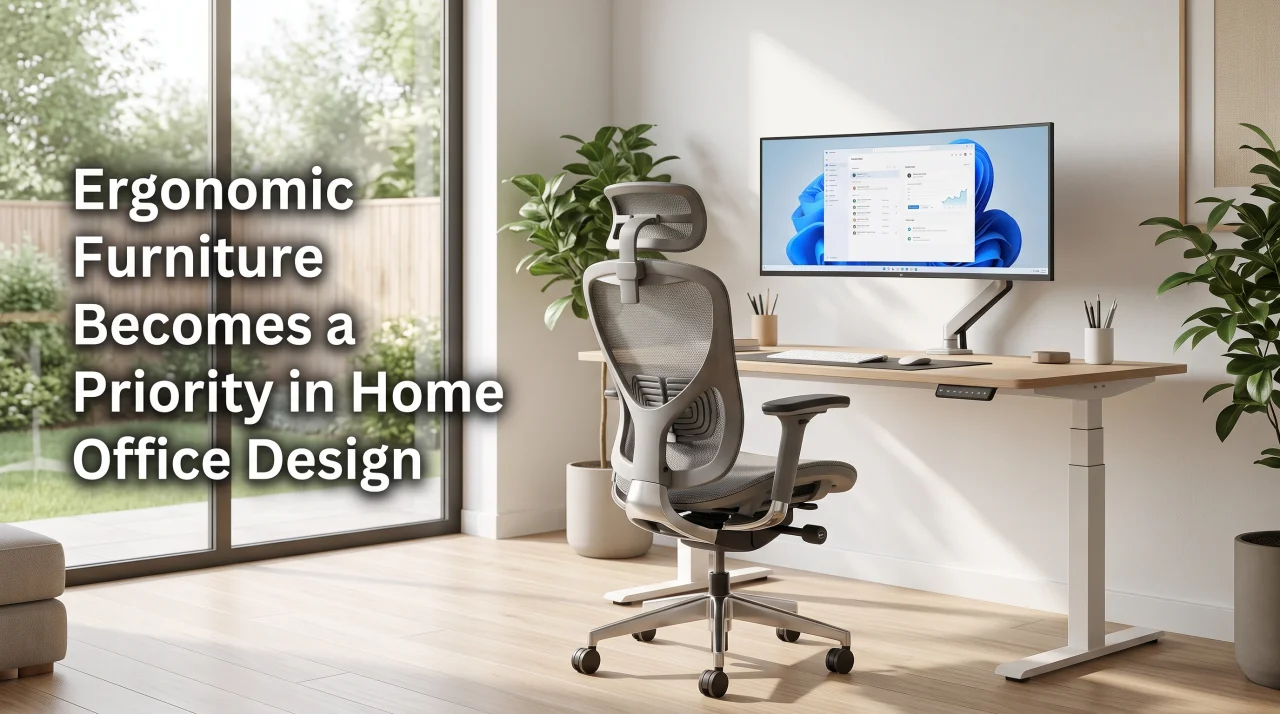
The growth of remote and hybrid working has changed the way residential spaces are designed. Rooms that were once used exclusively for relaxation are increasingly being adapted into work environments.
This transformation has increased demand for home office furniture that combines professional functionality with the comfort and visual character expected in residential interiors.
The Importance of an Appropriate Desk
The desk remains the central element of a home office.
Modern desks are increasingly designed with adjustable heights, integrated cable management, storage solutions, and flexible configurations. These features can help users create more organized work environments while adapting the furniture to different working positions.
Height-adjustable desks are particularly relevant to flexible working environments because they allow users to alternate between sitting and standing.
Office Chairs Focus on Support
A suitable office chair can significantly influence the overall usability of a workspace.
Contemporary ergonomic chairs often include adjustable seat height, back support, armrests, and other features that allow users to personalize their position.
Manufacturers are also paying greater attention to materials and aesthetics, creating office chairs that fit more naturally into residential interiors.
Storage Keeps the Workspace Organized
Storage is another important consideration in home office design.
Shelving, drawers, cabinets, and mobile storage units can help keep documents and equipment organized without overwhelming the room.
Compact storage solutions are particularly useful when a home office shares space with another room.
Furniture Needs to Fit Residential Interiors
Unlike traditional corporate offices, home offices are part of a domestic environment.
This means furniture needs to balance professional functionality with residential aesthetics. Wood finishes, softer colors, compact proportions, and multifunctional products can help create a workspace that feels integrated rather than temporary.
Technology Influences Furniture Design
Modern home offices depend on computers, monitors, chargers, and other electronic equipment.
Furniture manufacturers are responding with integrated cable management, charging stations, monitor supports, and concealed technology compartments.
These features can reduce visual clutter and create cleaner work environments.
Small Spaces Require Flexible Solutions
Not every home has a dedicated office room.
Foldable desks, wall-mounted workstations, compact desks, and multifunctional storage allow homeowners to create working areas within bedrooms, living rooms, and other spaces.
Furniture that can be folded away or repurposed after working hours can be particularly valuable in compact homes.
Looking Ahead
As flexible working remains an important part of modern professional life, home office furniture will continue to evolve.
Future products are likely to focus on ergonomics, adaptability, technology integration, and residential aesthetics.
The modern home office needs to support productivity without compromising comfort or the overall character of the home.
Ergonomic desks, supportive chairs, integrated storage, and flexible furniture systems are helping homeowners create workspaces that respond to the demands of contemporary working life.