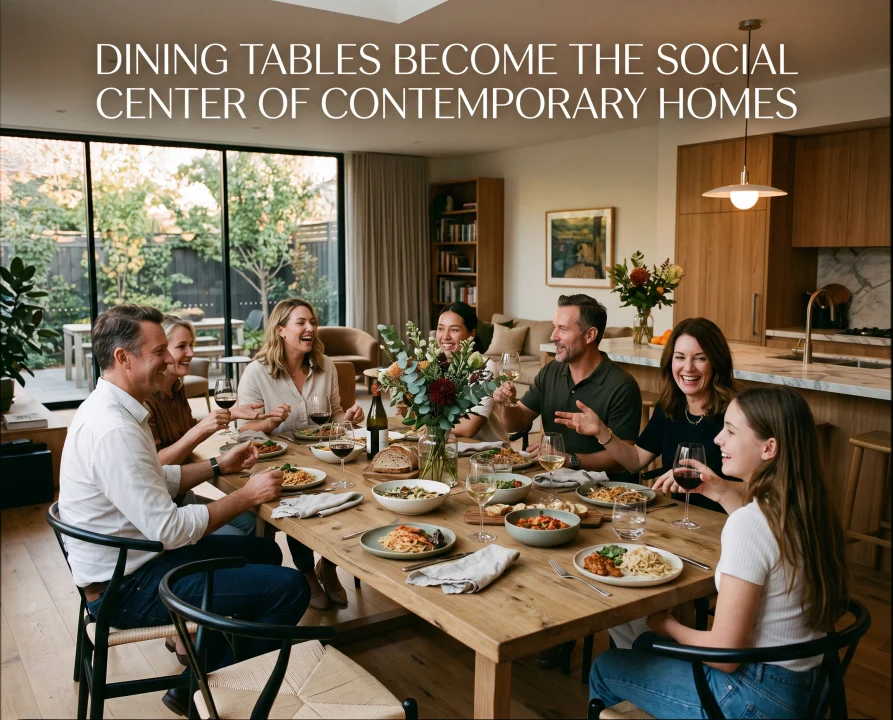
The dining table has traditionally been associated with meals, but its role within contemporary homes is expanding. As residential spaces become more multifunctional, dining tables are increasingly used for studying, working, socializing, creative activities, and family gatherings.
This evolution is influencing both the design and functionality of dining room furniture.
The Dining Table Has Multiple Roles
A modern dining table may serve several purposes throughout a single day.
It can provide a workspace during the morning, a study area in the afternoon, and a gathering place for meals in the evening.
This multifunctional role makes dimensions, durability, and comfort particularly important considerations.
Extendable Tables Offer Flexibility
Extendable dining tables are becoming increasingly popular because they can accommodate different numbers of users.
A table can remain compact for everyday use and expand when guests arrive. This allows homeowners to maintain efficient use of space without permanently dedicating a large area to a maximum seating capacity.
Material Choices Continue to Evolve
Wood remains a popular choice for dining tables because of its warmth and versatility.
However, manufacturers are also using stone, glass, metal, ceramic, and engineered surfaces. These materials offer different combinations of durability, maintenance requirements, and visual character.
Dining Chairs Focus on Comfort
As dining areas become multifunctional, chair comfort is becoming increasingly important.
People may remain seated for extended periods during meals, conversations, work, or study. Ergonomic proportions and supportive forms can therefore make a significant difference to the overall dining experience.
Open-Plan Homes Influence Design
In open-plan homes, the dining area often sits between the kitchen and living room.
This means dining furniture needs to complement several different design elements simultaneously. Material, color, scale, and shape can help create visual continuity between connected spaces.
Sustainable Dining Furniture
Sustainability is increasingly influencing the dining category.
Manufacturers are exploring responsibly sourced wood, recycled metals, recycled materials, and durable finishes. Furniture designed to last longer can also reduce the frequency of replacement.
Dining Furniture Becomes More Adaptable
Flexible furniture systems are particularly useful in contemporary homes.
Stackable chairs, benches, extendable tables, and movable storage allow homeowners to change the arrangement according to different occasions.
This adaptability can be valuable when the dining room needs to accommodate larger gatherings or other activities.
Dining furniture will likely continue to evolve alongside changing lifestyles.
The distinction between dining, working, and social spaces is becoming less rigid, creating demand for furniture capable of supporting several functions.
Manufacturers that combine flexibility, durability, comfort, and thoughtful design will be well positioned to respond to these changing requirements.
The dining table is becoming much more than a surface for meals. It is increasingly serving as a social, functional, and multifunctional center of the contemporary home.
As residential spaces continue to adapt to changing lifestyles, dining furniture will play an increasingly important role in creating interiors that are flexible, comfortable, and efficient.