Open-plan offices continue to provide businesses with flexibility and opportunities for collaboration, but managing noise remains one of the biggest challenges associated with these environments.
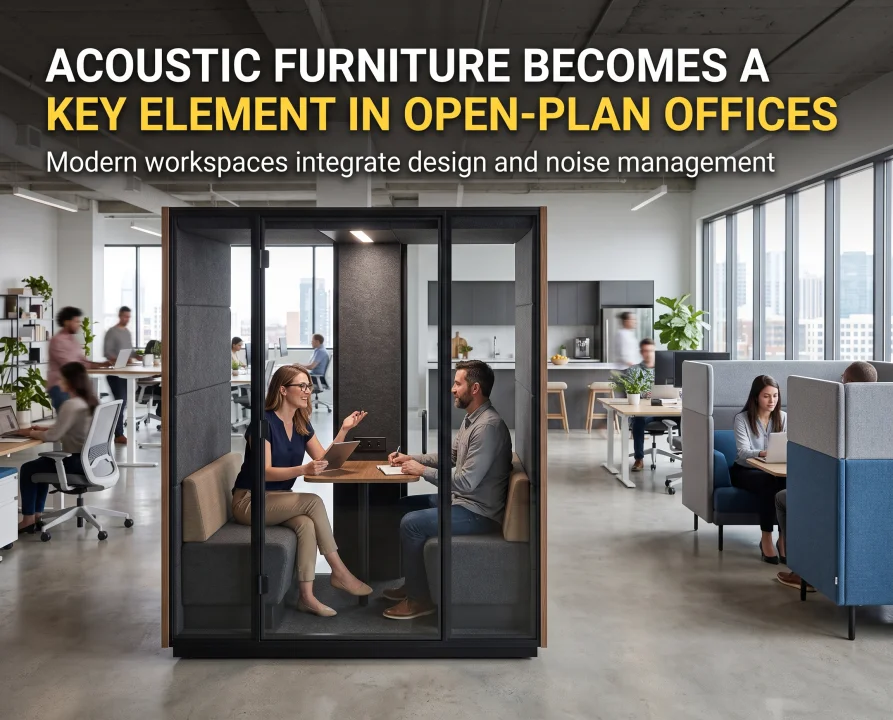
As companies rethink workplace design, acoustic furniture is becoming an increasingly important solution. From sound-absorbing partitions to enclosed seating and acoustic meeting pods, manufacturers are developing products that help create quieter and more comfortable workplaces without completely separating employees.
The Challenge of Open-Plan Workplaces
Open offices can encourage communication and collaboration, but conversations, phone calls, meetings, and general movement can create unwanted background noise.
For employees working on tasks that require concentration, excessive noise can make it more difficult to maintain focus.
This has encouraged designers to consider acoustic performance as part of furniture selection.
Acoustic Furniture Offers Flexible Solutions
Unlike permanent architectural walls, acoustic furniture can often be moved or rearranged.
Freestanding screens, acoustic partitions, high-back sofas, and enclosed seating can create quieter zones without requiring significant construction.
This makes them particularly useful for workplaces where layouts may change frequently.
Acoustic Seating Combines Privacy and Comfort
High-backed sofas and lounge systems can provide both comfortable seating and a degree of acoustic separation.
These products can create informal meeting areas or individual focus spaces within larger offices.
Their furniture-like appearance can also make them less visually disruptive than conventional office partitions.
Materials Influence Acoustic Performance
The effectiveness of acoustic furniture depends significantly on its materials and construction.
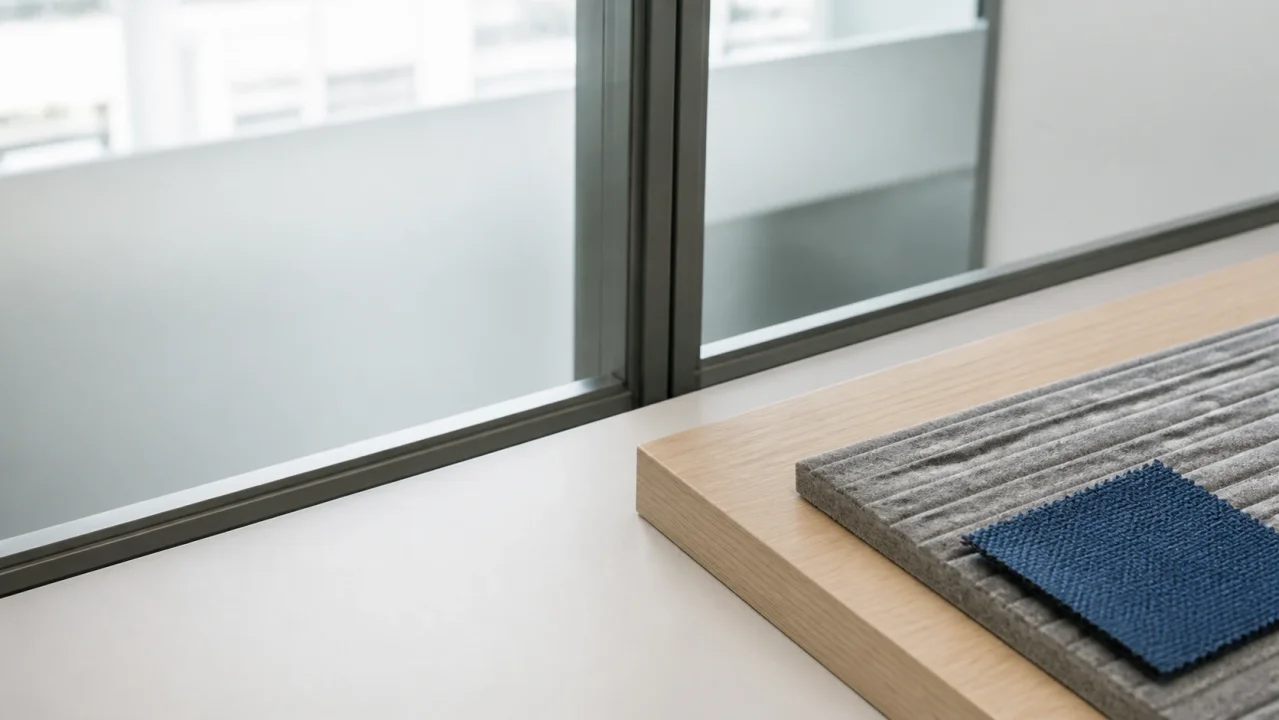
Textiles, recycled PET panels, acoustic foam, perforated surfaces, and other sound-absorbing materials can help reduce sound reflections.
Manufacturers are increasingly combining these technical properties with contemporary finishes and colors to create products that fit different workplace aesthetics.
Supporting Hybrid Work
The growth of hybrid working has also influenced acoustic furniture.
Employees may need private spaces for video calls, individual concentration, or online meetings while still working within an open environment.
Acoustic pods and enclosed workstations can provide these functions without requiring a separate room for every employee.
Sustainability Enters Acoustic Design
Sustainability is becoming another consideration in acoustic furniture development.
Some manufacturers are using recycled materials, particularly recycled plastic fibers, to create sound-absorbing panels and surfaces.
Products designed for disassembly and recycling can also help reduce waste at the end of their useful life.
Flexible Offices Need Flexible Furniture
Modern offices are rarely static.
Companies may expand, reduce their workforce, introduce new working models, or reorganize departments. Furniture that can move and adapt allows businesses to respond to these changes more efficiently.
Acoustic furniture is therefore becoming part of a broader movement toward flexible workplace design.
Acoustic performance will likely become an increasingly standard consideration when selecting office furniture.
Manufacturers will continue developing products that combine sound management, ergonomics, flexibility, sustainability, and visual quality.
Acoustic furniture is helping modern workplaces address one of the most important challenges of open-plan office design.
By combining sound-absorbing materials with flexible furniture systems, businesses can create environments that support both collaboration and concentration.
As workplace design continues to evolve, acoustic performance is likely to become just as important as ergonomics and aesthetics when selecting office furniture.