By Cengiz Eselioğlu | Furnipress
For the past 17 years, I have been providing digital services to furniture companies while closely following developments in the international furniture industry. During this time, I have observed that successful furniture brands are not necessarily those offering the largest collections or the most expensive products. What truly distinguishes a global brand is its ability to develop a recognizable design identity and translate that identity into different markets.
Cattelan Italia is one of the companies that deserves attention in this context.
Founded in Italy in 1979, the brand has evolved from a family business into an internationally recognized name in contemporary furniture design. Today, its collections reach customers in more than 140 countries.
However, what interests me most about Cattelan Italia is not simply its international presence. It is how the company has transformed furniture, particularly dining tables, into architectural statements while building a broad commercial ecosystem around its design language.
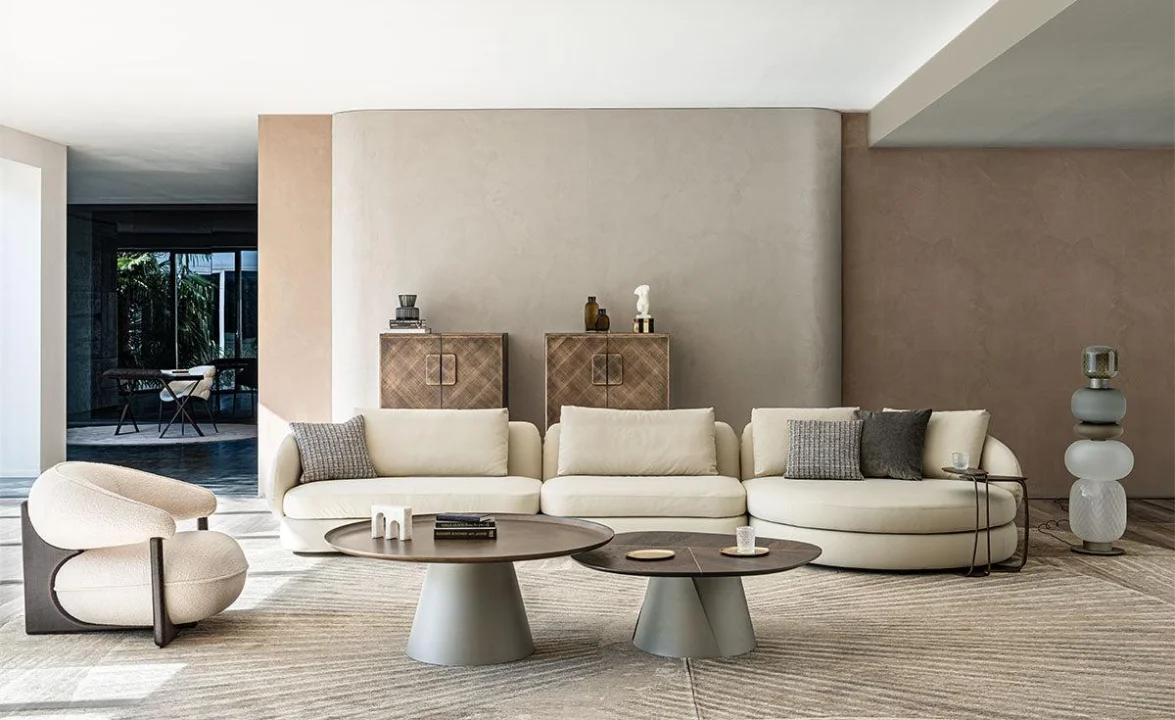
From a Family Workshop to an International Design Brand
The story of Cattelan Italia begins with Giorgio Cattelan, whose early exposure to woodworking and furniture manufacturing came through his father's workshop.
Together with Silvia Cattelan, he established the company in 1979, initially developing furniture that combined traditional manufacturing knowledge with a contemporary approach to materials.
The company's early focus on marble and glass tables proved significant. These products helped establish the foundations of a design identity in which materials, structure, and visual impact would become increasingly important.
International expansion followed relatively quickly, with the company's first manufacturing facility established in Carrè, in Italy's Vicenza province, in 1982.
Looking at this development from a business perspective, I see an important distinction.
Cattelan Italia did not build its international identity simply by promoting Italian craftsmanship. It created products with sufficiently recognizable characteristics to support that identity.
This is an essential lesson for furniture manufacturers seeking international growth. Manufacturing quality is necessary, but recognizable design creates differentiation.

Furniture as Architecture: The Design Philosophy of Cattelan Italia
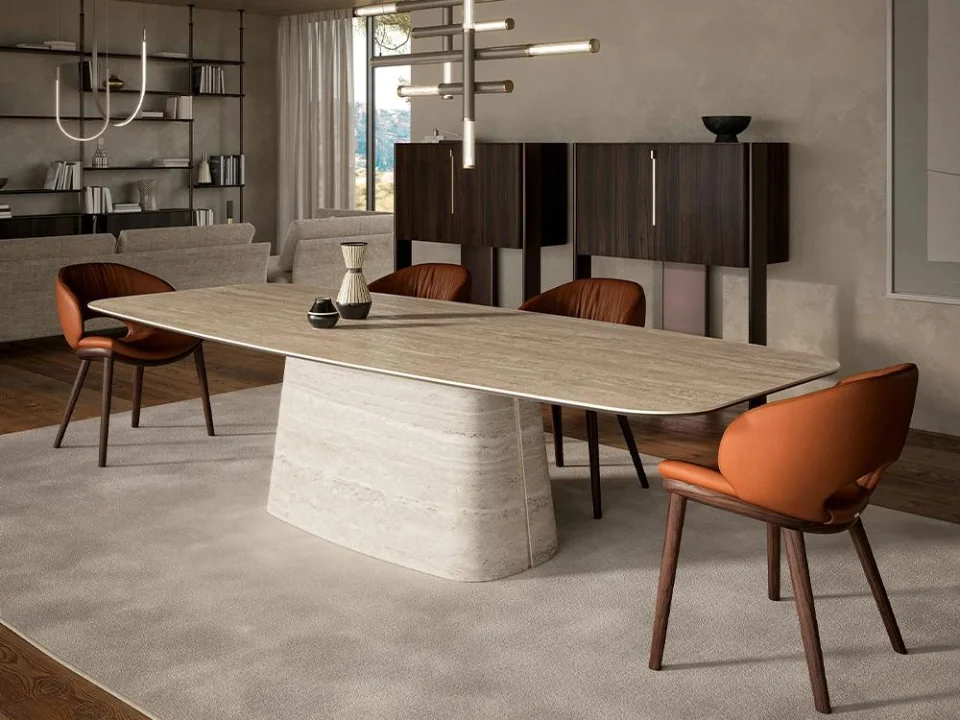
One of the most distinctive characteristics of Cattelan Italia is its approach to combining metal, glass, wood, ceramics, and marble.
In many conventional furniture collections, metal serves a supporting function. At Cattelan Italia, it frequently becomes one of the most visually important elements of the design.
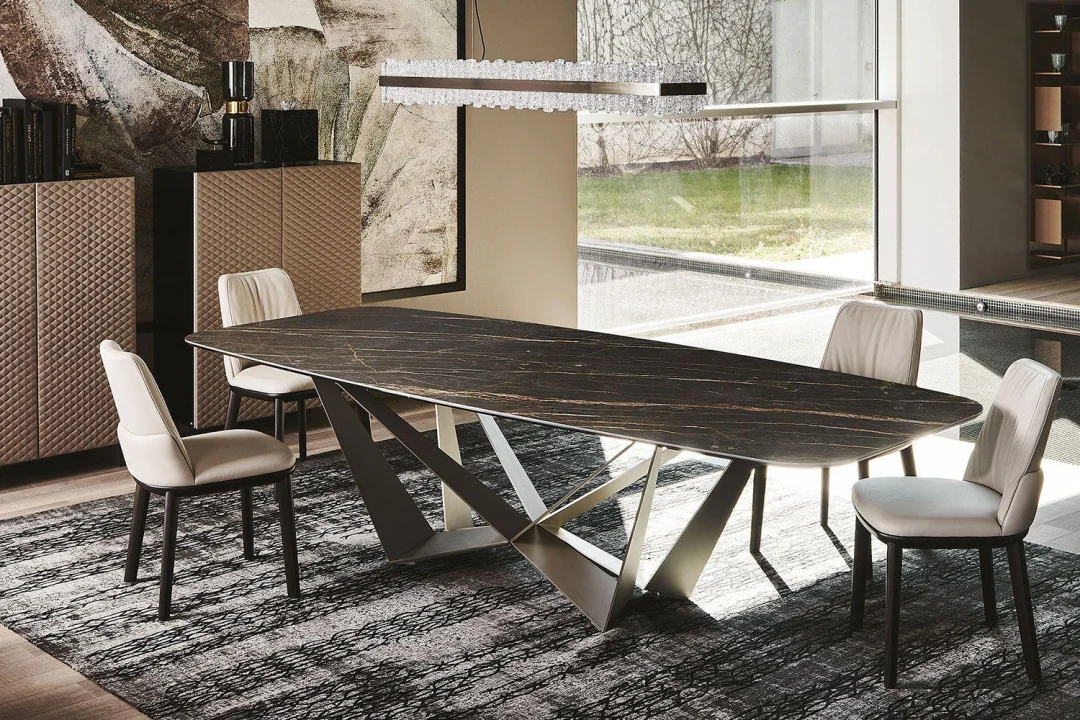
The Skorpio table family is perhaps the clearest example.
Its intersecting steel elements create an architectural composition beneath the tabletop. The structure is not merely a conventional supporting base; it establishes the product's visual identity.
From an interior architectural perspective, this is particularly interesting.
A dining table with a sculptural base changes how the surrounding space is perceived. Rather than functioning solely as furniture, it becomes a focal point around which lighting, chairs, flooring, and architectural finishes can be organized.
This design approach is especially relevant in spacious contemporary residences, where individual furniture pieces often need to contribute to the architectural character of an otherwise restrained interior.
There is, however, an important balance to consider.
A visually powerful table does not automatically create a successful interior. Sculptural furniture requires appropriate proportions, sufficient circulation space, controlled material combinations, and carefully planned lighting.
For interior architects, the challenge is to give these products enough visual freedom without allowing them to dominate the entire room.
In my view, this is one of the reasons Cattelan Italia appeals not only to end consumers but also to design professionals.
Its furniture can contribute directly to the spatial identity of a project.
Beyond Dining Tables: The Expansion into Complete Living Environments
Although dining tables remain among Cattelan Italia's most recognizable products, the company's portfolio extends far beyond this category.
Its contemporary collections include chairs, sideboards, bookcases, desks, coffee tables, lighting, mirrors, beds, upholstered furniture, and outdoor products.
The expansion into sofas and armchairs is particularly noteworthy.
At Milan Design Week 2025, Cattelan Italia highlighted its broader approach to upholstered furniture, demonstrating an ambition to create more complete living environments.
From a commercial perspective, I consider this a strategic development.
A company recognized primarily for statement dining furniture can increase its relevance to both retailers and interior designers by providing coordinated products across multiple living spaces.
For a luxury furniture showroom, offering complementary categories creates opportunities to sell complete interior compositions rather than individual pieces.
For architects and designers, a broader collection can simplify material coordination while maintaining consistency in the visual language of a project.
Nevertheless, I believe maintaining a distinctive identity becomes more difficult as a portfolio expands.
The long-term challenge for Cattelan Italia will be ensuring that its new seating and living collections are as recognizable as the dining tables that helped establish its reputation.
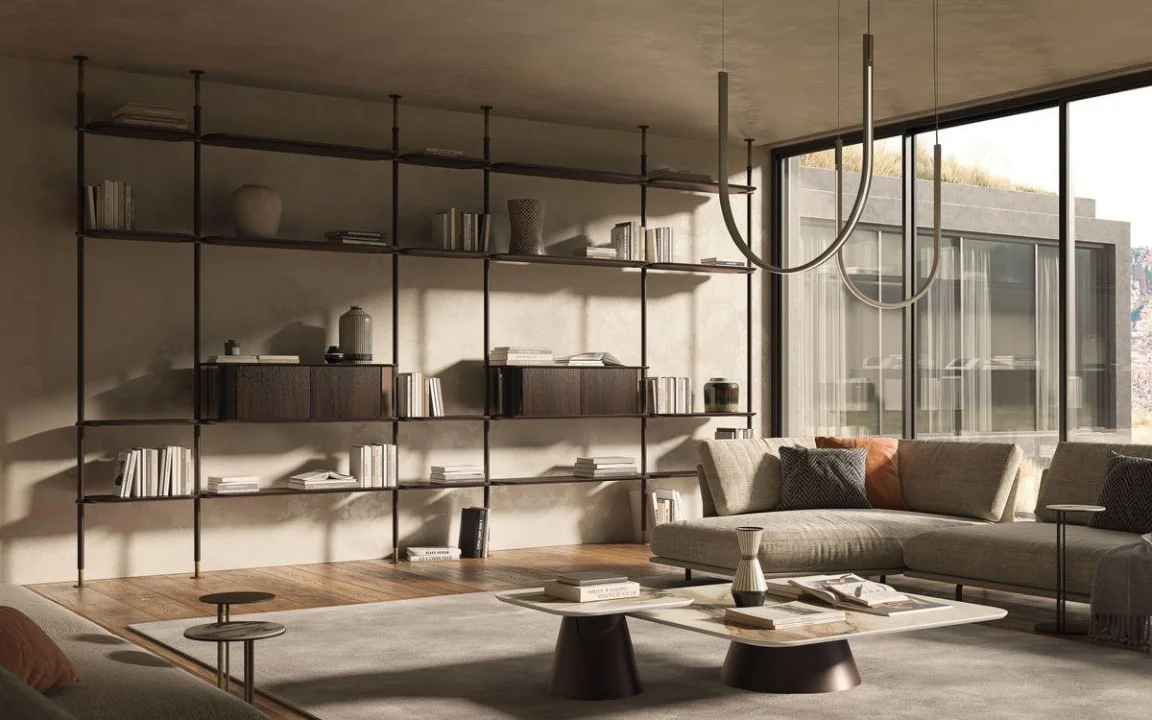
The Importance of Material Innovation
Another aspect that deserves attention is the company's material strategy.
Cattelan Italia works extensively with decorative ceramics, glass, metal, wood, marble, leather, and carefully developed surface finishes.
Its Keramik products are particularly interesting because they offer the visual richness associated with natural stone through an extensive collection of decorative ceramic surfaces.
Hand-brushed metal finishes, including Brushed Bronze and Brushed Grey, further strengthen the brand's distinctive aesthetic.
From an interior design perspective, the combination of these materials produces an interesting contrast.
Metal provides architectural definition, ceramic and stone-effect surfaces contribute visual richness, while upholstery and natural wood introduce warmth.
The success of this combination depends on proportion and restraint.
An interior filled entirely with reflective ceramics, metallic finishes, and sculptural furniture can easily become visually overwhelming.
The strongest applications, in my opinion, are those that balance Cattelan Italia's expressive furniture with quieter architectural surfaces.
This approach is particularly suitable for contemporary luxury residences, premium apartments, and sophisticated hospitality environments.
A Global Brand with a Clearly Defined Customer
Cattelan Italia reports a presence in more than 140 countries through an international distribution network that includes authorized retailers, flagship locations, branded display areas, and sales representatives.
This level of international reach is important, but geographic presence alone does not explain the company's positioning.
I would define Cattelan Italia's core audience as design-conscious consumers operating within the premium and luxury segments of the furniture market.
Its customers are not necessarily looking for traditional luxury characterized by elaborate ornamentation, heavy carvings, or historical references.
Instead, the brand appeals to buyers who associate luxury with contemporary architecture, distinctive materials, sophisticated manufacturing, and internationally recognized Italian design.
The target audience therefore includes affluent homeowners, buyers of premium residential properties, design-oriented professionals, interior architects, and customers furnishing high-end residences.
In the broader luxury furniture landscape, I would position Cattelan Italia as an established international premium-design brand with a strong identity in sculptural contemporary furniture.
It competes through recognizable design, material options, and collection breadth rather than relying exclusively on rarity or individually commissioned craftsmanship.
Which International Markets Offer the Strongest Opportunities?
When analyzing Cattelan Italia's international appeal, I believe it is important to distinguish between the company's established worldwide distribution and the markets where its design language offers particularly compelling opportunities.
Its presence in more than 140 countries confirms broad international distribution, but the public information available does not establish an exact ranking of those countries by revenue or sales volume.
My geographic assessment therefore focuses on design compatibility, luxury residential development, purchasing characteristics, and opportunities within the premium furniture sector.
Europe: A Natural Market for Contemporary Italian Design
European markets such as Germany, France, the United Kingdom, Switzerland, Belgium, and the Netherlands represent relevant environments for a brand of this type.
These markets contain established design retail networks, experienced interior professionals, and consumers familiar with European furniture manufacturing traditions.
There is also significant competition.
Brands including Bonaldo, Bontempi Casa, Eforma, and other contemporary European furniture manufacturers compete for attention within overlapping product categories.
For Cattelan Italia, differentiation depends on maintaining the strength of its design identity while supporting retailers with flexible specifications, reliable service, and strong brand communication.
North America: Opportunities in Design-Led Luxury Residences
The United States represents an important market to consider because of its scale, affluent consumer base, and extensive high-end residential design sector.
In cities such as New York, Miami, Los Angeles, and Chicago, contemporary Italian furniture can complement luxury apartments, architect-designed houses, and premium residential developments.
The Skorpio and Napoleon table families illustrate the type of visually distinctive product that can be positioned within these interiors.
However, the American market also places considerable importance on distribution efficiency, delivery reliability, customer service, and relationships with interior design professionals.
For international furniture brands, beautiful products alone are rarely sufficient.
Commercial success requires a dependable local ecosystem.
The Middle East: Architectural Luxury and Statement Furniture
In my assessment, the Middle East is one of the most compelling regions for the broader category of sculptural contemporary luxury furniture.
The United Arab Emirates, Saudi Arabia, Qatar, and Kuwait deserve particular attention.
High-end villas, luxury apartments, branded residential projects, and hospitality developments create opportunities for furniture with substantial visual presence.
Large dining spaces and reception areas can be especially suitable for expressive tables, decorative metal finishes, and striking lighting compositions.
However, this market should not be treated as stylistically uniform.
Some projects favor restrained international minimalism, while others require stronger decorative character, bespoke dimensions, or more elaborate material combinations.
Brands operating in the region must respond to different architectural preferences rather than assume that all luxury customers share one aesthetic.
Asia-Pacific: Growing Relevance of Contemporary Design
China, Singapore, South Korea, Japan, and Australia represent distinct but relevant opportunities for high-end European furniture.
Singapore's premium residential market, for example, creates demand for sophisticated furniture suitable for carefully planned contemporary interiors.
In Japan, where spatial efficiency and precise detailing are particularly important in many residential projects, the compatibility of individual products depends heavily on scale.
China offers a broad luxury consumer market but also presents significant complexity in distribution, brand positioning, and local competition.
The important point is that Asia cannot be approached as a single furniture market.
Product dimensions, design preferences, price expectations, and distribution strategies must be evaluated separately.
The Commercial Value of Architects and Interior Designers
In analyzing premium furniture brands, I believe the role of architects and interior designers is sometimes underestimated.
These professionals do much more than recommend products.
They influence purchasing decisions, define material combinations, and determine how furniture will function within a completed environment.
Cattelan Italia supports this professional audience through product catalogues, technical information, finish selections, and a digital configurator that allows users to explore different product specifications.
Its showroom and curated display environments also help communicate how individual products can be integrated into complete interiors.
This professional infrastructure is commercially significant.
A dining table may initially attract attention through an impressive photograph. However, an interior architect needs far more information before specifying it for a project.
Dimensions, finishes, material samples, technical drawings, seating clearances, and delivery considerations all affect the final decision.
From my experience working with furniture companies on their digital presence, I have repeatedly seen how product presentation influences commercial perception.
A company that makes its products easier to discover, understand, visualize, and specify provides a better experience for both professionals and consumers.
Cattelan Italia's investment in digital product presentation reflects the growing importance of this process.
Digital Communication as a Competitive Advantage
An aspect I find particularly interesting is the relationship between design identity and digital presentation.
Today, international furniture brands are discovered through many different channels: search engines, social media, architecture publications, digital catalogues, and design-focused online platforms.
A premium furniture company must maintain a consistent identity across all of them.
Cattelan Italia benefits from a highly recognizable visual language that translates effectively into photography, digital catalogues, and interior visualizations.
Its sculptural products are well suited to visual communication because their design characteristics remain recognizable even when viewed individually.
But digital communication should not be confused with attractive images alone.
For international furniture companies, digital competitiveness increasingly depends on the quality of product information, localized communication, user experience, professional resources, and coordination with distribution partners.
I believe this will become an even more decisive competitive factor in the years ahead.
Consumers and interior designers expect to move smoothly from discovering a product to understanding its specifications and identifying an authorized supplier.
The brands that manage this process effectively can create commercial advantages beyond the products themselves.
Where Does Cattelan Italia Stand Against Its Competitors?
Cattelan Italia occupies an interesting position within the international contemporary furniture sector.
Its closest comparisons are not necessarily the most expensive Italian furniture houses, but brands that share an emphasis on sophisticated modern furniture, sculptural construction, innovative materials, and internationally oriented retail distribution.
Bonaldo, Bontempi Casa, and Eforma are particularly relevant comparisons within the dining table and contemporary living furniture categories.
Other luxury brands may overlap in materials or customers while operating with different design philosophies and price structures.
Boca do Lobo, for example, adopts a more theatrical and decorative approach to statement furniture, while Cattelan Italia generally expresses its identity through contemporary geometry and material composition.
This distinction matters commercially.
The international luxury furniture market is not a single competitive category.
Different brands compete for customers with different aesthetic expectations, project requirements, and perceptions of luxury.
Cattelan Italia's strength lies in offering distinctive Italian contemporary furniture with a recognizable design vocabulary and broad international availability.
Its challenge is that sculptural metal bases, decorative ceramics, and bold dining table designs are no longer exclusive characteristics of one manufacturer.
As competitors adopt similar materials and forms, continuous design development becomes essential.
My Assessment: What Makes Cattelan Italia Successful?
After examining Cattelan Italia's design identity, international positioning, and product strategy, I see three fundamental strengths behind the brand.
The first is consistency.
Despite expanding into numerous furniture categories, the company maintains a recognizable relationship between geometry, materials, and contemporary Italian design.
The second is international accessibility.
Through a broad distribution network and professional product resources, Cattelan Italia has made its design language available to cust