
Hybrid Living Spaces Design Trends: Where Work, Life, and Leisure Converge
Explore hybrid living spaces design trends transforming modern homes. Discover flexible furniture, modular layouts, and smart solutions that support work, relaxation, and social life in one space.
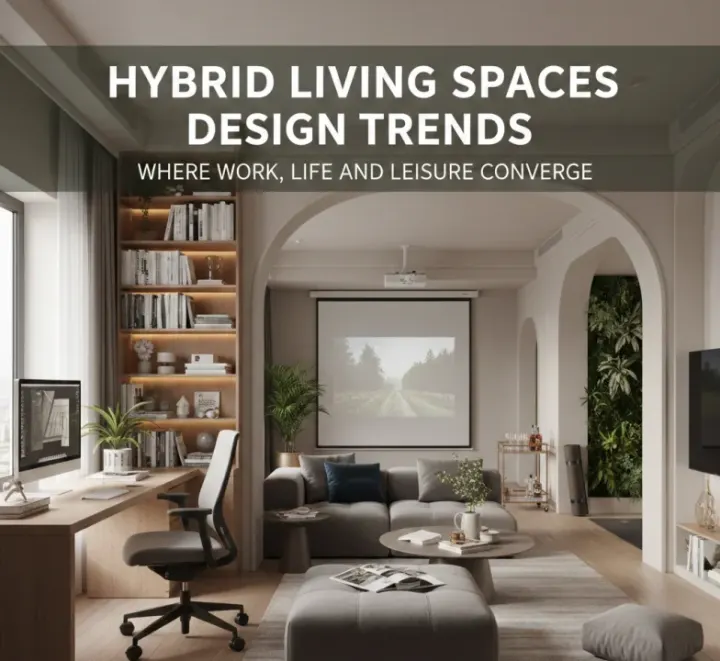
Modern homes are no longer defined by single-purpose rooms. The living room is a workspace, the bedroom becomes a creative studio, and the dining area often doubles as a meeting zone. As highlighted by FurniPress, hybrid living spaces are emerging as one of the most influential interior design trends of the decade.
Driven by remote work, compact urban housing, and evolving lifestyles, hybrid interiors prioritize adaptability without compromising comfort or style.
1. The Rise of Multi-Functional Rooms
Hybrid living spaces are built around flexibility. Instead of rigid layouts, designers now create interiors that shift seamlessly throughout the day. A sofa transforms into a guest bed, a console unfolds into a desk, and sliding panels redefine room boundaries within minutes.
This transformation-focused design allows homeowners to maximize every square meter while maintaining visual harmony.
2. Modular Furniture as the Foundation
At the core of hybrid interiors lies modular furniture systems. Sectional sofas, stackable storage units, and reconfigurable shelving allow users to adapt layouts based on immediate needs.
Modularity ensures longevity as well. Rather than replacing entire furniture sets, homeowners can expand or rearrange components as their lifestyle evolves.
3. Zoning Without Walls
One of the most innovative aspects of hybrid living design is soft zoning. Instead of permanent walls, furniture defines areas within open spaces. Bookshelves act as dividers, rugs delineate activity zones, and lighting variations signal functional shifts between work and relaxation.
This approach maintains openness while supporting privacy and organization.
4. Integrated Technology for Seamless Living
Hybrid spaces rely heavily on discreet technology integration. Desks with concealed cable systems, smart lighting adaptable to different activities, and storage units with hidden charging stations allow technology to blend into the environment.
The goal is to create interiors that feel residential and warm, even when serving professional purposes.
5. Aesthetic Cohesion Across Functions
One of the challenges of hybrid design is ensuring stylistic consistency. Modern trends favor neutral palettes, natural materials, and minimalist silhouettes that work equally well in professional and personal contexts.
This visual cohesion prevents hybrid spaces from feeling fragmented or temporary.
6. Comfort as a Central Priority
Because hybrid spaces host multiple daily activities, comfort is essential. Ergonomic seating, adjustable tables, layered lighting, and soft textiles ensure that environments remain supportive throughout extended use.
Designers are increasingly focusing on tactile materials and calming tones to enhance emotional well-being within multifunctional homes.
7. Sustainability and Long-Term Flexibility
Sustainability plays a significant role in hybrid living spaces. Durable materials, adaptable systems, and repairable components reduce waste and support long-term usability.
Investing in flexible furniture reduces the need for frequent replacements, aligning with environmentally conscious lifestyles.
Hybrid living spaces represent a shift toward intelligent, adaptable, and human-centered design. By blending work, leisure, and social life within cohesive interiors, modern homes are becoming more dynamic than ever before.
Through its coverage of emerging furniture innovations and global design movements, FurniPress continues to highlight how hybrid living is redefining the future of interior spaces.
Comments
0 comments
No published comments yet. Be the first to join the conversation.