
Global Furniture Weekly: Innovation and Circularity Define the Start of 2026
As the industry gathers in Cologne for the year’s first major trade fair, the focus shifts toward AI-integrated living, carbon-neutral production, and the full implementation of digital transparency.
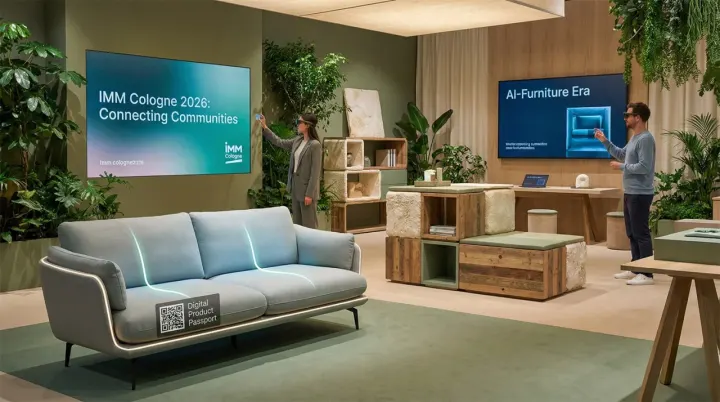
As the industry gathers in Cologne for the year’s first major trade fair, the focus shifts toward AI-integrated living, carbon-neutral production, and the full implementation of digital transparency.
January 12, 2026 – The global furniture industry has entered 2026 with a clear mandate: reconciling high-tech integration with radical sustainability. This week, as the international community converges for the opening of IMM Cologne, several key trends and economic shifts are shaping the narrative for the year ahead.
1. IMM Cologne 2026: "Connecting Communities" and Fluid Spaces
The doors have officially opened at IMM Cologne, where the theme "Connecting Communities" is dominating the halls. This year, the focus has shifted from standalone furniture pieces to "ecosystems of living."
The Hybrid Home: Manufacturers are showcasing "fluid" furniture—pieces that transition seamlessly between professional workstations and relaxation zones. With the permanent shift to hybrid work, the demand for ergonomic, aesthetically pleasing home-office solutions continues to drive the premium segment.
Micro-Living Solutions: Urbanization remains a key driver, with a surge in modular, multi-functional designs tailored for high-density living in global hubs like London, New York, and Tokyo.
2. Post-CES Analysis: The Rise of the "AI-Furniture" Era
Following the conclusion of CES (Consumer Electronics Show) in Las Vegas last week, the furniture industry is busy integrating "Ambient Intelligence."
Smart Ergonomics: 2026 marks the arrival of AI-driven seating that adjusts posture in real-time based on biometric sensors.
Health-Tracking Sleep Systems: The mattress sector is evolving into a health-tech vertical, with new models featuring non-invasive monitoring for sleep apnea and cardiovascular health, positioning the bedroom as a cornerstone of the "well-tech" movement.
3. Regulatory Milestone: Digital Product Passports (DPP)
A major talking point this week in the European market is the final preparation for the mandatory Digital Product Passports (DPP).
Transparency First: Leading European manufacturers have unveiled QR-code-based systems that allow consumers to track a piece of furniture’s entire lifecycle—from the forest of origin to the carbon footprint of its logistics.
Circular Economy: This regulation is accelerating the "Furniture-as-a-Service" (FaaS) model, where brands like IKEA and high-end Italian firms are expanding their rental and refurbishment programs to meet strict circularity targets.
4. Material Innovation: Beyond Recycled Plastics
Sustainability in 2026 has moved beyond simple recycling. This week saw several breakthrough announcements regarding bio-fabricated materials:
- Mycelium and Algae: High-end designers are increasingly adopting mushroom-based "leather" and algae-sequestered resins for structural components, reducing reliance on petroleum-based foams.
- Carbon-Negative Timber: New certifications for "Carbon-Negative" timber furniture are becoming the gold standard for luxury interior projects.
5. Market Outlook: Near-Shoring and Regional Resilience
Economically, the industry is witnessing a "Regionalization 2.0." Due to increased carbon taxes on shipping and the need for supply chain agility, major retailers are moving production closer to their primary markets.
- The "Local" Advantage: Manufacturing hubs in Eastern Europe, Mexico, and Southeast Asia are seeing record investments as brands prioritize "near-shoring" to reduce lead times and environmental impact.
- Market Growth: Despite global inflationary pressures, the Sustainable Luxury segment is projected to grow by 7.4% in 2026, driven by a new generation of eco-conscious high-net-worth consumers.
Weekly Summary for FurniPress Readers
The message from the first full week of 2026 is clear: Furniture is no longer just about style; it is about data, health, and the planet. Companies that fail to integrate digital transparency and smart functionality into their designs are likely to find themselves sidelined in an increasingly sophisticated global market.
Comments
0 comments
No published comments yet. Be the first to join the conversation.