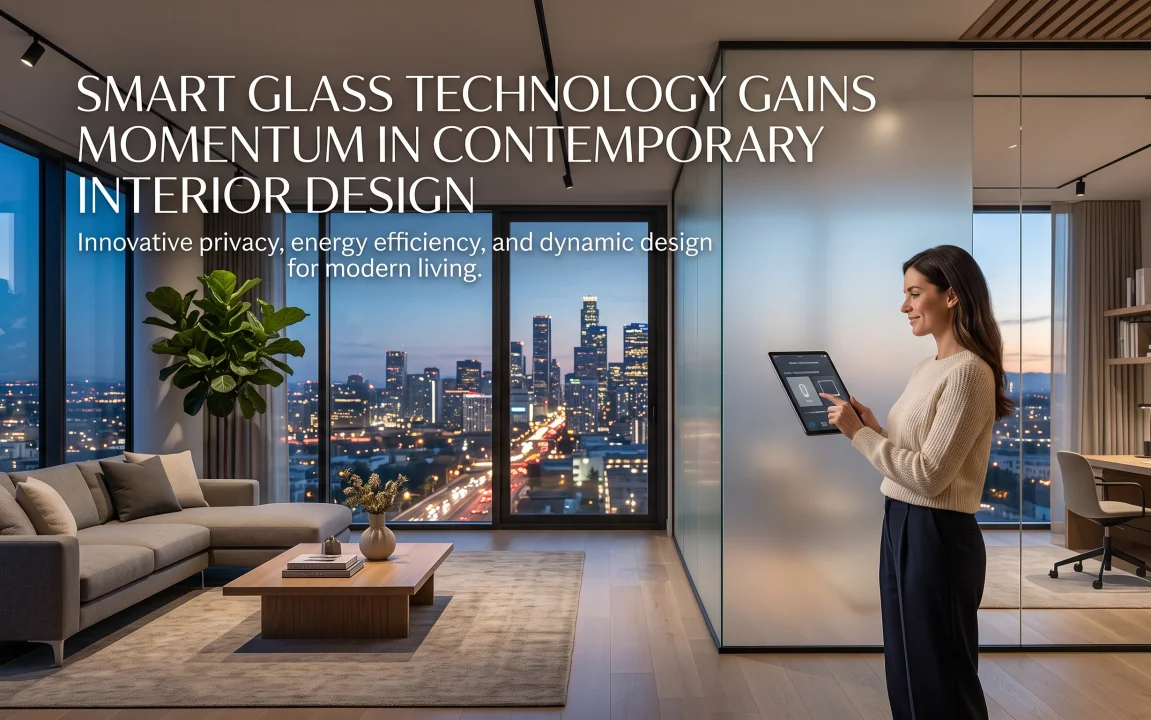
Smart glass is rapidly becoming one of the most talked-about innovations in interior architecture. Once limited to high-end commercial projects, the technology is now finding its way into residential developments, hotels, healthcare facilities, and corporate offices. Designers are increasingly using smart glass to create adaptable spaces that offer both openness and privacy without compromising aesthetics.
Industry professionals say the growing demand reflects a broader shift toward flexible, technology-driven interiors that can respond to changing user needs throughout the day.
A New Approach to Space Planning
Traditional walls permanently divide rooms, while standard glass partitions often sacrifice privacy. Smart glass offers an alternative by allowing transparent surfaces to switch to opaque with the touch of a button or through automated controls.
This flexibility enables interior architects to design spaces that easily transition between collaborative and private environments.
Modern offices, conference rooms, luxury residences, and hospitality projects are among the sectors adopting this technology at an increasing rate.
Growing Demand in Commercial Interiors
Corporate workplaces continue to drive much of the demand for smart glass installations.
Meeting rooms equipped with switchable glass provide privacy when required while maintaining an open, contemporary appearance during normal operations. Hotels are also integrating the technology into guest rooms and luxury bathrooms to maximize space while enhancing the guest experience.
Healthcare facilities are exploring smart glass as a hygienic alternative to curtains and blinds, simplifying maintenance while improving patient privacy.
Energy Efficiency Becomes a Priority
Beyond privacy, smart glass contributes to building performance.
Some advanced systems help reduce solar heat gain and glare, decreasing the need for artificial cooling and lighting. As energy efficiency becomes a priority in commercial construction, architects are increasingly considering smart glass as part of broader sustainable design strategies.
The technology also supports daylight optimization, improving indoor comfort while lowering energy consumption.
Integration with Smart Building Systems
Manufacturers are developing smart glass products that integrate with intelligent building management systems.
Glass panels can automatically respond to daylight levels, occupancy, scheduled events, or voice-controlled automation. This connectivity allows interior environments to become more responsive while reducing manual operation.
As smart buildings continue to evolve, seamless integration between architectural elements and digital technologies is expected to become increasingly common.
Minimalist Design Without Compromise
Interior designers appreciate smart glass for its ability to support clean, minimalist aesthetics.
Instead of relying on bulky curtains or blinds, designers can maintain uninterrupted visual lines while still offering users complete privacy when needed. This approach is particularly valuable in contemporary interiors where simplicity and openness remain central design principles.
Expanding Residential Applications
Although commercial projects currently dominate the market, residential adoption is increasing.
Luxury homes are incorporating smart glass into bathrooms, home offices, walk-in wardrobes, and open-plan living spaces. Homeowners value the flexibility of creating private areas without permanently separating rooms.
As production scales and technology becomes more affordable, industry experts expect residential demand to continue growing.
Future Outlook
Manufacturers continue investing in research to improve switching speed, durability, energy performance, and affordability.
Future developments may include smart glass capable of displaying digital information, adjusting tint automatically based on weather conditions, or generating solar energy through integrated photovoltaic technologies.
These innovations could further expand the role of glass as an active component of intelligent interior architecture.
About FurniPress
FurniPress delivers the latest news and insights from the worlds of furniture design, interior architecture, materials, and technology, helping industry professionals stay informed about the innovations shaping tomorrow's built environments.