
Adaptable Children's Furniture Responds to Changing Family Needs
Adaptable children's furniture combines flexible storage, convertible designs, durable materials, and practical safety considerations for evolving family needs.
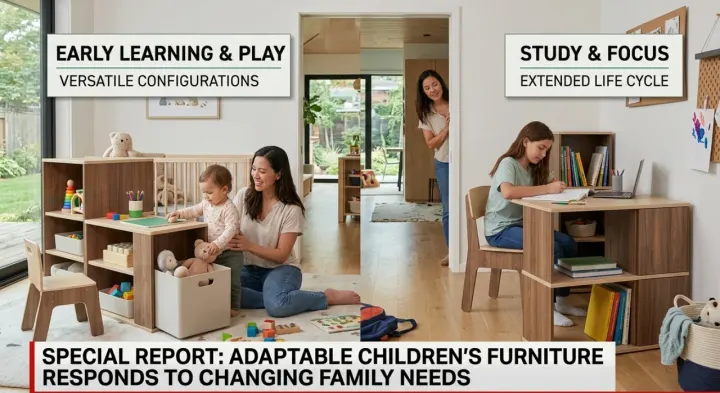
The furniture requirements of a young child differ from those of a school-age child or teenager.
Storage needs change as clothing, books, toys, and educational materials accumulate. Activities also evolve, creating new requirements for desks, seating, and dedicated study areas.
Furniture that can be adjusted or reconfigured may remain useful through several stages of development.
Storage Supports Everyday Organization
Storage is one of the most important elements of children's furniture.
Open shelves can make frequently used items accessible, while drawers and closed cabinets can help organize belongings that are not needed every day. Clearly separated storage areas can also make it easier to maintain an organized room.
The appropriate combination depends on the room's dimensions, the child's needs, and the level of adult supervision required.
Convertible Furniture Offers Flexibility
Some children's furniture is designed to serve more than one purpose.
Convertible beds, extendable desks, adjustable shelving, and storage benches can respond to changing spatial requirements. Certain products can be modified as children grow, although the available adjustments depend on the specific design.
When evaluating convertible products, families should consider the manufacturer's instructions, approved configurations, and long-term availability of replacement components.
Safety Must Guide Design Decisions
Children's furniture requires careful attention to safety.
Stability, appropriate fastening, smooth edges, secure drawers, and suitable materials are important considerations. Tall storage units may require anchoring to prevent tipping, and bunk beds need to meet applicable safety requirements.
Parents and caregivers should follow the manufacturer's assembly instructions and age recommendations rather than assuming that a multifunctional design is automatically suitable for every child.
Materials and Maintenance
Children's rooms can experience frequent spills, marks, and everyday wear.
Furniture finishes should therefore be selected with cleaning and durability in mind. Surfaces that are easy to maintain can help keep the room functional, while replaceable components may reduce the need to discard an entire product when a part becomes damaged.
Material selection should also consider relevant safety and emissions standards.
Creating Space for Play and Study
A child's room may need to support several activities within a limited area.
Compact desks, wall-mounted storage, and furniture with integrated compartments can help preserve open floor space. As study requirements increase, the layout may need to accommodate additional equipment, books, and lighting.
Planning for these future needs can reduce the likelihood of major furniture changes.
Sustainability Through Longer Use
Adaptable furniture can support more responsible consumption when it remains safe, functional, and suitable as needs change.
Adjustable dimensions, replaceable parts, durable construction, and designs that can be reused by other family members may extend a product's useful life.
However, adaptability should never come at the expense of age-appropriate safety or stability.
Adaptable children's furniture offers families a practical way to respond to changing needs without continually replacing entire room arrangements.
Through flexible storage, convertible designs, durable materials, and careful safety considerations, manufacturers can create products that support children's everyday activities while remaining useful for longer.
The most effective designs combine adaptability with simplicity, reliability, and suitability for the people using them.
Comments
0 comments
No published comments yet. Be the first to join the conversation.