
Natural Materials Bring Warmth to Contemporary Interior Design
Natural materials are influencing contemporary interiors as designers use wood, stone, textiles, and organic surfaces to create warmer and more tactile environments.
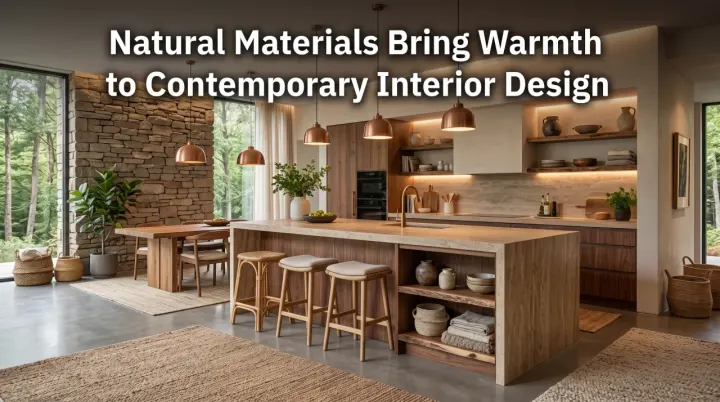
Contemporary interior design is often associated with clean lines, minimalist layouts, and restrained color palettes. However, designers are increasingly introducing natural materials to create warmer and more tactile environments.
Wood, stone, natural textiles, ceramics, and other organic materials can provide visual contrast while helping contemporary interiors feel more connected to nature.
Wood Remains a Versatile Material
Wood continues to play an important role in contemporary interiors.
It can be used for flooring, wall panels, furniture, cabinetry, ceilings, and architectural details. Different species, finishes, and grain patterns allow designers to achieve a wide range of visual effects.
Light-colored timber can support a minimalist interior, while darker wood can introduce greater visual depth.
Stone Creates a Sense of Permanence
Stone is another material frequently used in contemporary interiors.
Marble, limestone, travertine, and other natural stones can be used for countertops, walls, floors, fireplaces, and furniture surfaces.
Their natural variations make each application visually distinctive.
Textiles Soften Architectural Spaces
Hard architectural surfaces can sometimes create interiors that feel visually cold.
Natural textiles can help introduce softness through curtains, upholstery, rugs, and decorative elements. Linen, wool, and cotton can add texture without overwhelming a minimalist design approach.
Natural Materials and Sustainability
Material selection is increasingly connected to environmental considerations.
Responsibly sourced timber, durable natural stone, recycled materials, and long-lasting products can support more sustainable design strategies.
However, sustainability depends on sourcing, transportation, manufacturing, maintenance, and product lifespan rather than simply whether a material is natural.
Combining Natural and Industrial Elements
Contemporary designers are not necessarily using natural materials in purely traditional environments.
Wood can be paired with metal, stone with glass, and natural textiles with polished surfaces. These combinations create contrast and prevent interiors from becoming visually predictable.
Material Texture Becomes More Important
The tactile qualities of materials are receiving greater attention.
Rough stone, visible wood grain, woven textiles, and handcrafted ceramics can create sensory experiences that smooth manufactured surfaces cannot always provide.
This focus on texture can add depth to minimalist spaces without requiring additional decoration.
Natural Materials in Commercial Interiors
Hotels, restaurants, offices, and retail spaces are also using natural materials to create distinctive environments.
Material choices can communicate brand values while influencing how users perceive a space. Warm materials can make hospitality environments feel more inviting, while natural textures can help create a calmer atmosphere in workplaces.
Looking Ahead
Natural materials are likely to remain relevant as designers continue searching for ways to balance minimalism with warmth.
Future interiors may increasingly combine natural resources, recycled materials, advanced manufacturing, and traditional craftsmanship.
Natural materials offer interior designers an effective way to introduce warmth, texture, and individuality into contemporary spaces.
Through thoughtful combinations of wood, stone, textiles, ceramics, and other materials, designers can create interiors that feel modern without becoming visually cold or impersonal.
Comments
0 comments
No published comments yet. Be the first to join the conversation.