
Automation Is Reshaping Modern Furniture Manufacturing
Automation is transforming furniture manufacturing through robotics, digital production systems, improved precision, and more efficient manufacturing processes.
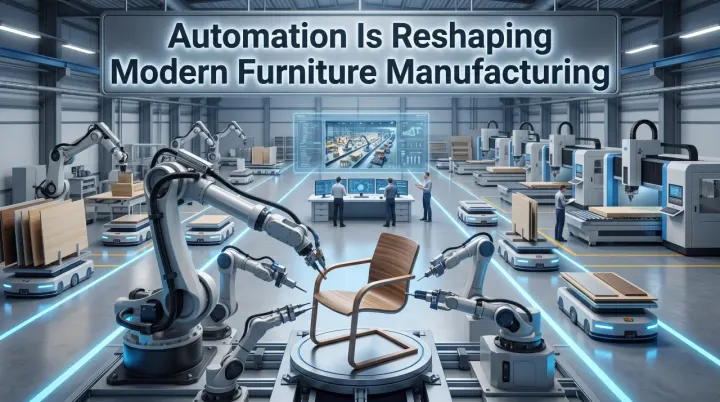
Technology is transforming the furniture manufacturing industry at multiple stages of production. Automated machinery, robotics, digital modeling, and connected production systems are helping manufacturers improve precision while responding to increasing demands for efficiency and customization.
Automation is not simply replacing traditional production methods. In many factories, it is being used alongside skilled workers to create more consistent and adaptable manufacturing processes.
Precision Becomes Easier to Achieve
Automated cutting, drilling, milling, and finishing equipment can perform highly precise operations repeatedly.
This level of consistency can reduce production errors and improve the quality of finished furniture. Digital production systems can also ensure that measurements and specifications are transferred accurately from design files to manufacturing equipment.
Robotics Enter Production Lines
Robotic systems are being used for tasks such as material handling, sanding, finishing, assembly, and packaging.
These systems can perform repetitive operations consistently and can be particularly valuable in large-scale manufacturing environments.
Human workers remain important for quality control, creative decisions, maintenance, and more complex production tasks.
Digital Design Connects with Manufacturing
One of the most important developments is the connection between digital design and physical production.
Computer-aided design files can increasingly be integrated directly into manufacturing workflows. This reduces the need for repeated manual interpretation and allows manufacturers to move more efficiently from concept to production.
Automation Supports Customization
Customization has traditionally been difficult to combine with large-scale production.
Digital manufacturing technologies are changing this relationship. Computer-controlled machinery can switch between different dimensions, shapes, and specifications without requiring extensive manual reconfiguration.
This allows manufacturers to offer more personalized products while maintaining relatively efficient production.
Reducing Material Waste
Automation can also contribute to more efficient material use.
Computer-controlled cutting systems can optimize layouts and reduce unnecessary offcuts. This is particularly important when working with expensive materials such as timber, stone, and specialized panels.
Better material efficiency can reduce both production costs and environmental impact.
Challenges for Manufacturers
Automation also requires significant investment.
Manufacturers may need to invest in machinery, software, employee training, maintenance, and updated production facilities.
Companies must therefore carefully evaluate which processes benefit most from automation rather than simply adopting technology without a clear production strategy.
The Future of Smart Factories
The next stage of furniture manufacturing is likely to involve increasingly connected factories.
Machines, inventory systems, design software, and quality-control processes may communicate with each other to create more responsive production environments.
Data collected throughout the manufacturing process can also help companies identify inefficiencies and improve future production.
Automation is changing furniture manufacturing by improving precision, efficiency, customization, and material management.
The most successful manufacturers will likely be those that combine advanced technology with skilled human expertise rather than treating automation as a complete replacement for traditional knowledge.
Comments
0 comments
No published comments yet. Be the first to join the conversation.