
Entryway Furniture Gains Importance in Space-Efficient Home Design
Modern entryway furniture combines compact storage, seating, organization, and practical design to create more functional entrances in contemporary homes.
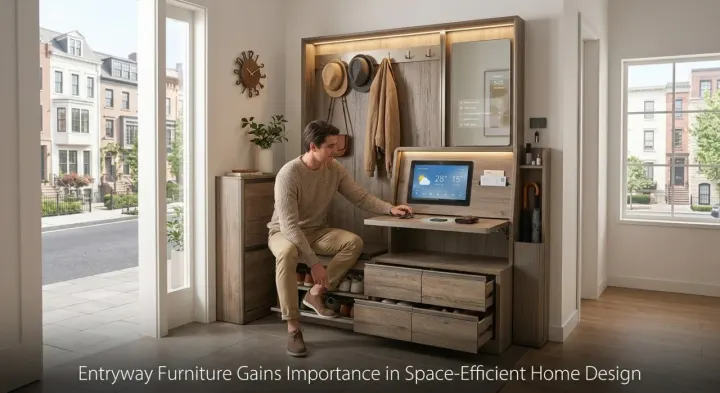
The entrance is often one of the smallest areas in a home, yet it accommodates several everyday activities. Shoes need to be stored, coats and bags require convenient places, and residents need sufficient space to move comfortably between the entrance and the rest of the home.
As residential interiors become more space-conscious, entryway furniture is receiving greater attention from designers and manufacturers. Compact storage, integrated seating, wall-mounted solutions, and multifunctional products are helping transform entrances into organized and practical spaces.
Small Entrances Require Careful Planning
A poorly planned entrance can quickly become crowded with shoes, bags, outerwear, and everyday accessories.
Furniture selection should therefore begin with an understanding of the available floor area and circulation requirements. Deep cabinets may provide considerable storage but can obstruct movement in narrow hallways.
Slim shoe cabinets, narrow consoles, and wall-mounted shelves offer alternatives that preserve more usable floor space.
Storage Becomes More Specialized
Entryway furniture is increasingly designed around specific organizational needs.
Shoe cabinets can separate footwear from other belongings, while drawers provide storage for keys, documents, and small accessories. Hooks and rails create accessible places for coats and bags.
Combining these elements into a coordinated system can reduce visual clutter and make everyday routines more efficient.
Integrated Seating Adds Convenience
Seating can make an entrance more practical, particularly when users need to put on or remove shoes.
A compact bench can provide this function while creating additional storage underneath. Some designs combine a seat, shoe compartments, and coat hooks within a single furniture unit.
These multifunctional products can be especially useful in apartments where separate furniture pieces would occupy too much space.
Vertical Storage Expands Possibilities
Walls offer valuable storage opportunities in compact entrances.
Wall-mounted shelves, hooks, mirrors, and shallow cabinets can use vertical space without occupying the entire floor area. However, their placement should account for accessibility and the movement of people through the hallway.
A combination of open and closed storage can also balance convenience with a cleaner visual appearance.
Materials and Finishes Influence First Impressions
Entryways establish the visual introduction to a home.
Wood finishes can create warmth, while painted surfaces and metal details can support contemporary interiors. Mirrors can help reflect light and create a greater sense of visual openness, particularly in narrow or poorly lit spaces.
Choosing finishes that relate to adjacent rooms can also strengthen the overall design continuity of the home.
Durability Matters in High-Use Areas
Unlike furniture placed in less frequently used rooms, entryway products experience regular contact with shoes, bags, moisture, and outdoor dirt.
Surfaces should be easy to clean, and storage mechanisms should withstand repeated use. Materials and finishes need to be selected according to the conditions of the particular home.
Manufacturers that combine compact dimensions with durable construction can address both aesthetic and practical requirements.
The Future of Entryway Furniture
Entryway furniture is likely to become increasingly adaptable as manufacturers respond to smaller homes and changing household routines.
Customizable storage, replaceable components, integrated seating, and flexible wall-mounted systems may offer new ways to organize entrances without requiring extensive renovation.
Entryway furniture demonstrates how thoughtful design can improve even the smallest areas of a home. By combining compact storage, seating, vertical organization, and durable materials, manufacturers can create products that make daily routines easier while strengthening the character of an interior.
As space efficiency becomes a priority in residential design, the entrance will remain an important area for furniture innovation.
Comments
0 comments
No published comments yet. Be the first to join the conversation.