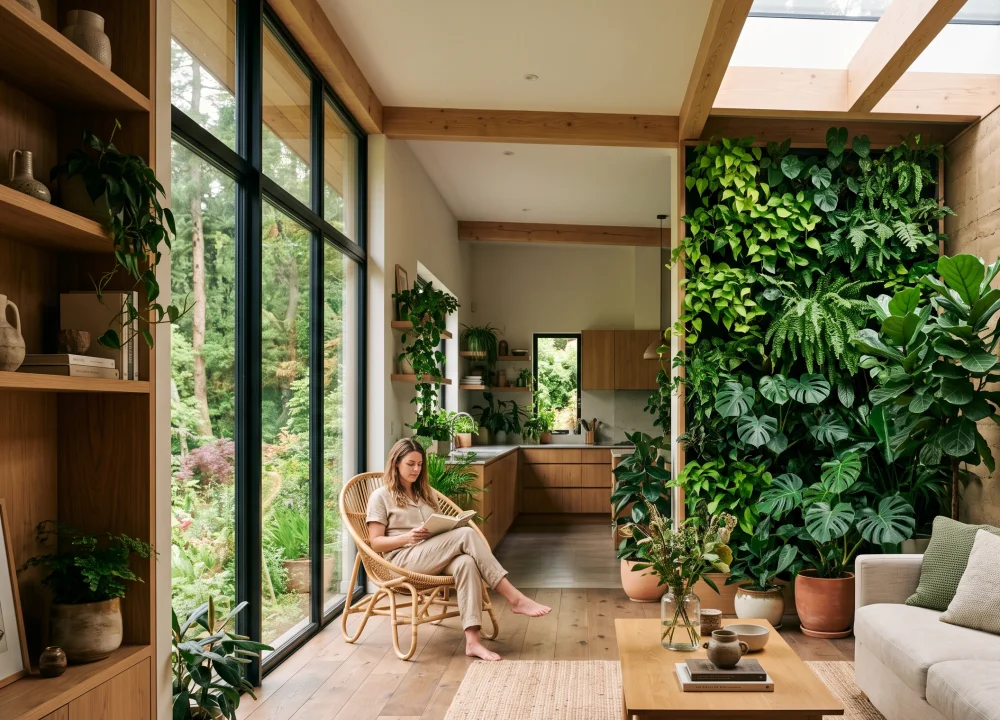
Designers are increasingly incorporating nature into interior architecture through a concept known as biophilic design. Rather than simply adding plants, this approach seeks to strengthen the relationship between people and the natural environment.
Growing interest in wellness, sustainability, and healthier indoor environments has made biophilic design one of the most influential trends in contemporary interiors.
Beyond Indoor Plants
Biophilic design includes a wide range of architectural strategies.
Natural daylight, organic materials, water features, natural ventilation, textured finishes, and landscape views all contribute to creating healthier indoor environments.
Furniture also plays an important role through the use of wood, stone, linen, rattan, and other natural materials.
Wellness Drives Demand
Research continues to highlight the importance of comfortable and healthy indoor environments.
Designers increasingly consider emotional well-being alongside aesthetics, creating interiors that encourage relaxation, productivity, and social interaction.
This philosophy has influenced residential projects, offices, hotels, healthcare facilities, and educational buildings.
Natural Colors Dominate
Earth-inspired colors continue to dominate furniture and interior collections.
Warm neutrals, soft greens, terracotta, sand, and wood finishes create calming environments while supporting biophilic design principles.
As cities become more densely populated, designers are expected to continue finding new ways to integrate nature into built environments.
Biophilic principles will likely remain an essential part of future interior architecture rather than a temporary design trend.