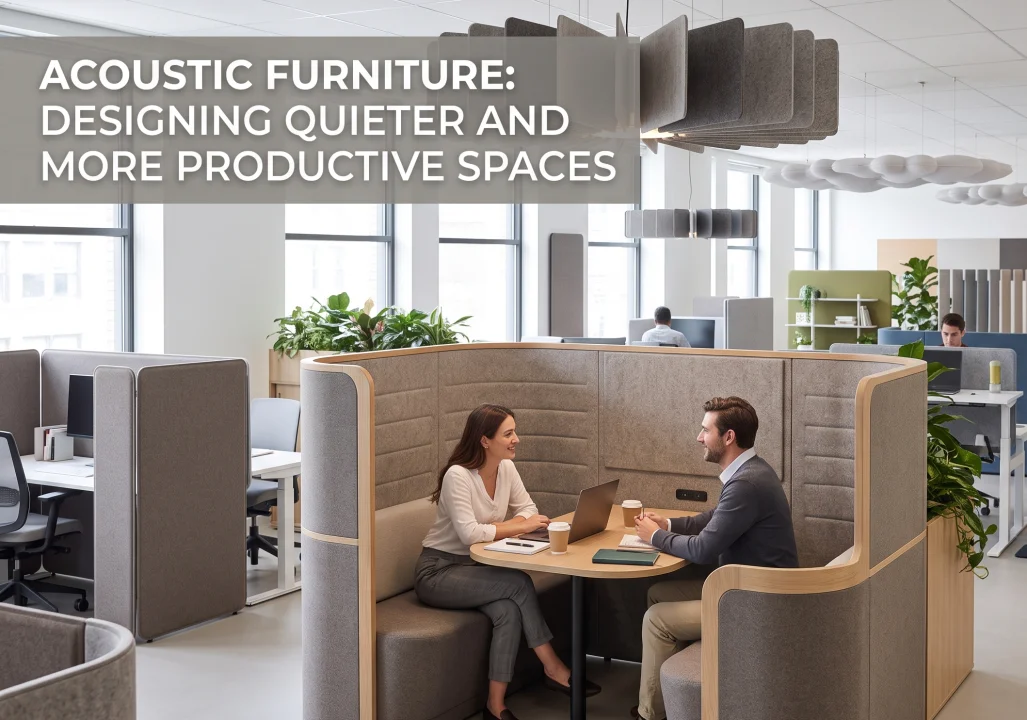
As open-plan offices, multifunctional homes, and shared public spaces become increasingly common, controlling noise has become a major challenge in interior design. While traditional acoustic solutions focus on walls and ceilings, furniture is now playing a significant role in improving sound quality within a space.
Acoustic furniture combines functionality with sound management, allowing designers to create quieter, more comfortable environments without sacrificing aesthetics. As highlighted by FurniPress, this category is becoming one of the fastest-growing segments in commercial and residential furniture design.
What Is Acoustic Furniture?
Acoustic furniture is specifically designed to absorb, diffuse, or block sound. Unlike conventional furniture, these products incorporate sound-absorbing materials that reduce echoes and limit the spread of noise.
Rather than acting as decorative elements alone, acoustic furniture actively contributes to the overall comfort of an interior.
Why Noise Matters
Excessive background noise affects concentration, communication, and overall well-being.
In workplaces, high noise levels can reduce productivity and increase mental fatigue. In homes, unwanted sound may interfere with relaxation, studying, or remote work. Hospitality venues also benefit from quieter environments that improve guest experiences.
Furniture designed with acoustic performance in mind helps solve these issues while maintaining attractive interiors.
Common Types of Acoustic Furniture
Manufacturers are expanding their product lines to include a wide variety of acoustic solutions, such as:
- High-back lounge chairs that create private seating areas
- Acoustic office pods for meetings and focused work
- Upholstered room dividers with sound-absorbing cores
- Privacy booths for collaborative spaces
- Modular seating systems with integrated acoustic panels
- Wall-mounted upholstered furniture elements
These products help divide spaces while simultaneously improving sound quality.
Materials That Improve Sound Absorption
The effectiveness of acoustic furniture depends largely on its materials.
Common sound-absorbing components include:
- High-density acoustic foam
- Recycled polyester fibers
- Felt panels
- Wool-based textiles
- Perforated wood structures
- Fabric-covered insulation layers
Many manufacturers are also incorporating recycled materials to improve sustainability without compromising acoustic performance.
Acoustic Furniture in Residential Spaces
Although originally developed for offices, acoustic furniture is becoming increasingly popular in homes.
Dedicated workspaces, media rooms, children's study areas, and open-plan apartments all benefit from improved sound control. Homeowners can create more peaceful environments without extensive renovations.
This trend reflects the growing importance of flexible living spaces that support multiple daily activities.
Design Without Compromise
Early acoustic products often prioritized performance over appearance. Today's collections demonstrate that sound management and contemporary design can coexist.
Manufacturers now offer acoustic furniture in a wide range of colors, textures, and forms, allowing designers to integrate these products seamlessly into modern interiors.
The Future of Acoustic Furniture
As hybrid work and flexible interiors continue to evolve, demand for acoustic furniture is expected to increase.
Future innovations may include smart acoustic systems that automatically respond to changing noise levels, modular products with interchangeable sound-absorbing components, and advanced sustainable materials that improve both environmental and acoustic performance.
Acoustic furniture is transforming interior design by addressing one of the most overlooked aspects of modern living: sound. Through innovative materials and thoughtful design, these products create quieter, healthier, and more productive environments for homes, offices, and hospitality spaces.
As the demand for functional and wellness-focused interiors continues to grow, FurniPress remains at the forefront of the trends and innovations shaping the future of furniture design.