
Why Furniture Is Becoming More Personalized Than Ever Before
Discover how personalization is transforming the furniture industry. Learn why custom furniture, made-to-order production, and consumer-driven design are shaping the future of interiors.
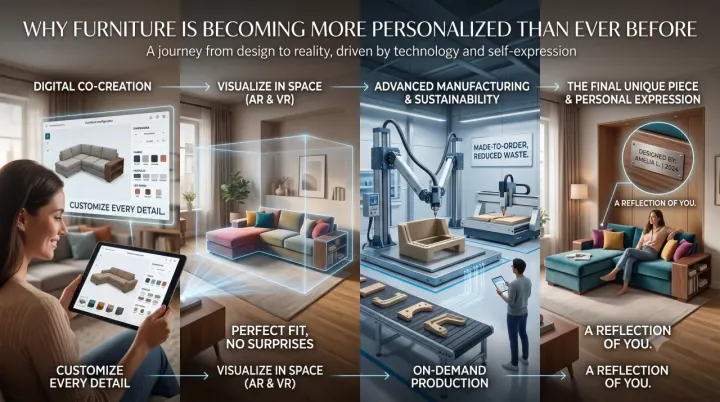
For decades, furniture shopping meant choosing from a limited selection of standard products available in stores. Today, that model is rapidly changing. Consumers are no longer satisfied with one-size-fits-all solutions—they want furniture that reflects their lifestyles, personal tastes, and the unique dimensions of their homes.
According to FurniPress, personalization has become one of the most significant forces shaping the modern furniture industry. Advances in digital manufacturing, online visualization tools, and flexible production systems have made customized furniture more accessible than ever before.
The Shift Toward Individual Expression
Modern homeowners see their living spaces as an extension of their identity. Furniture is no longer viewed simply as a functional necessity but as a way to express personality and lifestyle.
This shift has encouraged manufacturers to offer greater flexibility in materials, finishes, dimensions, fabrics, and configurations, allowing customers to create interiors that feel uniquely their own.
Technology Makes Customization Easier
Digital technology has dramatically simplified the customization process.
Many furniture brands now provide online configurators that allow customers to choose upholstery fabrics, wood finishes, colors, leg styles, and dimensions before placing an order. Some platforms even use augmented reality to help buyers visualize furniture within their own homes.
These tools reduce uncertainty while improving the overall purchasing experience.
Modular Systems Support Personalization
Modular furniture has become an ideal platform for customization.
Rather than selecting a fixed design, consumers can build seating arrangements, shelving systems, wardrobes, or storage solutions that fit their available space and future needs. As lifestyles change, additional modules can be added without replacing the original furniture.
This flexibility increases long-term value while reducing waste.
Made-to-Order Manufacturing
Instead of producing large quantities of identical products, many manufacturers are shifting toward made-to-order production.
This approach offers several advantages:
- Reduced inventory costs
- Lower material waste
- Greater design flexibility
- Improved customer satisfaction
- More efficient production planning
Made-to-order manufacturing also allows brands to respond more quickly to changing consumer preferences.
The Importance of Material Choice
Personalization extends beyond dimensions and layouts. Buyers increasingly want control over the materials used in their furniture.
Popular customization options include:
- Solid wood species
- Upholstery fabrics
- Leather finishes
- Metal frame colors
- Stone surfaces
- Sustainable materials
These choices enable customers to create furniture that aligns with both their design preferences and environmental values.
Luxury Through Exclusivity
Personalized furniture is becoming closely associated with luxury.
Rather than purchasing mass-produced products, many consumers prefer exclusive pieces created specifically for their homes. Limited production runs, handcrafted details, and bespoke finishes contribute to a stronger emotional connection between owner and furniture.
This exclusivity is becoming a defining feature of premium furniture brands.
Artificial Intelligence and the Next Stage of Customization
Artificial intelligence is expected to further transform furniture personalization.
Future systems may recommend furniture configurations based on room dimensions, household size, lifestyle, and aesthetic preferences. AI-powered design assistants could help customers create fully coordinated interiors while simplifying complex design decisions.
These innovations will make customization faster, more intuitive, and more accessible to a wider audience.
Personalization is reshaping every stage of the furniture industry, from product design and manufacturing to customer experience. As technology continues to advance, consumers will enjoy greater freedom to create furniture that reflects their individual lifestyles while benefiting from higher quality and longer-lasting products.
By following these evolving trends, FurniPress continues to showcase the innovations redefining furniture design and helping create interiors that are as unique as the people who live in them.
Comments
0 comments
No published comments yet. Be the first to join the conversation.