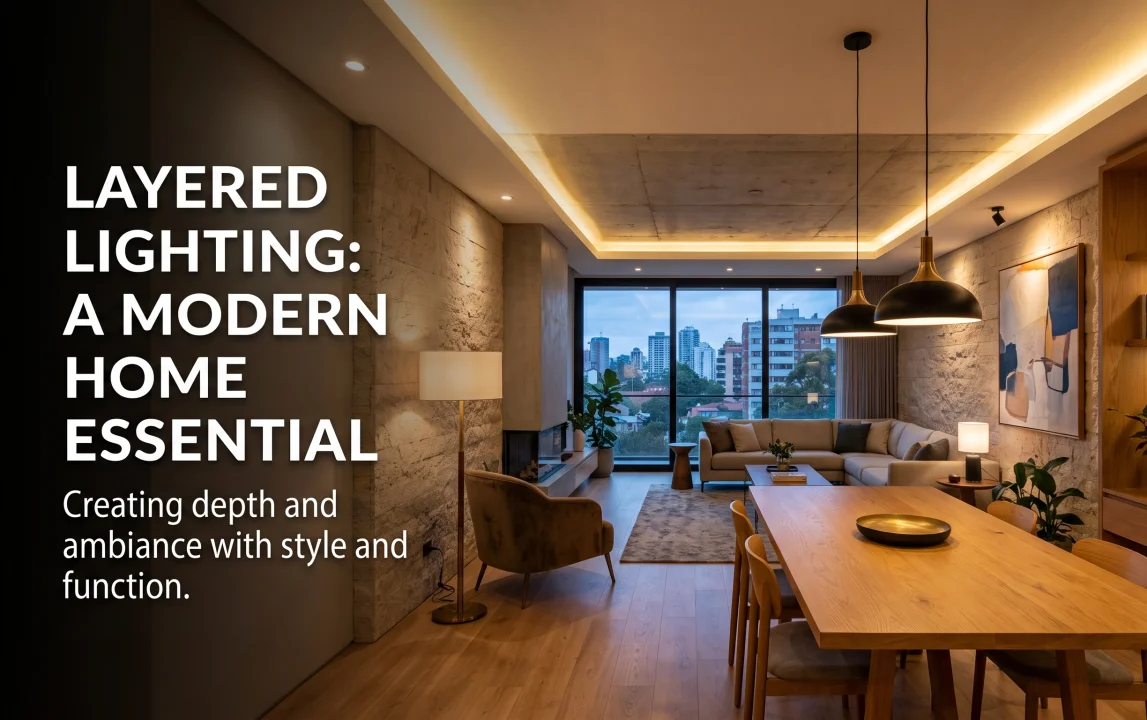
Lighting has become one of the most influential elements in contemporary interior design. Rather than relying on a single ceiling fixture, designers are creating layered lighting schemes that combine multiple light sources to improve both functionality and atmosphere.
This approach allows interiors to adapt to different activities while highlighting architectural features, furniture, and decorative elements.
Three Layers of Light
A successful lighting plan generally combines three different types of illumination.
Ambient lighting provides overall brightness throughout the room, task lighting supports specific activities such as reading or cooking, and accent lighting highlights artwork, furniture, or architectural details.
When used together, these layers create interiors that feel balanced and comfortable.
Lighting Shapes the Mood
The color temperature and intensity of lighting have a significant impact on how a space feels.
Warm lighting creates relaxed environments suitable for bedrooms and living rooms, while cooler lighting improves visibility in kitchens, bathrooms, and workspaces.
Adjustable lighting systems allow homeowners to easily switch between different moods throughout the day.
Energy Efficiency and Smart Controls
LED technology continues to dominate modern lighting design due to its efficiency and long lifespan.
Smart lighting systems also allow users to control brightness, schedules, and color temperature through mobile devices or voice assistants, improving convenience while reducing energy consumption.
As interior architecture continues to integrate technology, lighting will play an even greater role in shaping healthy, adaptable, and visually engaging living environments.
Thoughtfully designed lighting will remain one of the most effective ways to improve both the appearance and functionality of interior spaces.