
Integrated Lighting Expands the Functionality of Contemporary Furniture
Integrated furniture lighting combines illumination, practical functionality, and clean design through illuminated shelving, wardrobes, cabinets, and work surfaces.
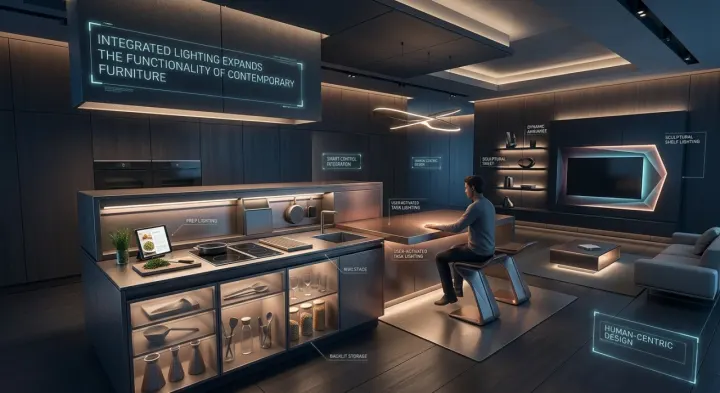
Lighting is often planned as a separate part of interior design, but it is increasingly being incorporated directly into furniture. Illuminated shelving, wardrobe lighting, display cabinets, and desks with integrated light sources demonstrate how furniture can contribute to both the appearance and functionality of a space.
This approach allows designers to place illumination close to specific activities while reducing the need for additional visible fixtures.
Wardrobe Lighting Improves Accessibility
Wardrobes can be difficult to use when their interiors are poorly illuminated.
Integrated lighting can help users identify clothing and accessories more easily, particularly in deep cabinets or enclosed storage areas. LED strips and compact fixtures can be positioned along shelves, hanging sections, or cabinet interiors.
Lighting systems should be designed to avoid excessive heat and should follow the manufacturer's electrical and installation requirements.
Shelving Combines Display and Illumination
Illuminated shelving can serve both practical and decorative purposes.
In living rooms, shelves may display books, objects, and collectibles. In retail environments, integrated lighting can help products become more visible without requiring a separate fixture for every display.
The position and intensity of the light influence the final result. Carefully placed illumination can emphasize objects, while excessive brightness or glare can distract from them.
Desks Benefit from Integrated Task Lighting
Furniture designed for work and study can incorporate lighting to support specific activities.
Integrated desk lighting can reduce the need for separate lamps and may help keep work surfaces organized. However, the light source must be positioned carefully to limit glare and unwanted shadows.
The appropriate solution depends on the desk layout, the user's activities, ambient lighting, and the characteristics of the light fixture.
Lighting Influences Material Appearance
Light can change how furniture materials are perceived.
Wood grain, textured finishes, glass, metal, and upholstery may appear different depending on the direction, color temperature, and intensity of illumination.
Designers need to consider these effects when integrating lighting into furniture, particularly where material appearance is an important part of the overall design.
Concealed Technology Supports Minimalist Design
Integrated lighting can support interiors that prioritize visual simplicity.
Concealed LED strips, recessed fixtures, and discreet controls can provide illumination without introducing additional visible objects. Wiring and power components can be incorporated into the furniture structure when the design allows appropriate access for installation and maintenance.
This requires coordination between furniture designers, manufacturers, and electrical professionals.
Maintenance and Replaceability Matter
Integrated lighting introduces additional components that may eventually require maintenance.
A well-designed product should allow relevant electrical components to be accessed and replaced where possible. If a light source fails, replacing the entire furniture unit can create unnecessary cost and waste.
Manufacturers should consider component availability, electrical safety, and maintenance instructions during product development.
Energy Efficiency and Lighting Quality
LED technology offers opportunities for efficient furniture lighting, but energy use is only one part of the design process.
Light quality, color rendering, glare control, durability, and suitability for the intended task also matter. Lighting should be selected according to its application rather than simply choosing the smallest or brightest available fixture.
Integrated lighting is expanding the functionality of contemporary furniture by combining illumination with storage, display, and work surfaces.
From illuminated wardrobes to shelving and desks, these products demonstrate how lighting can become part of furniture design rather than an entirely separate layer of the interior.
As manufacturers continue developing integrated solutions, successful designs will depend on balancing visual quality, practical performance, electrical safety, and long-term maintainability.
Comments
0 comments
No published comments yet. Be the first to join the conversation.