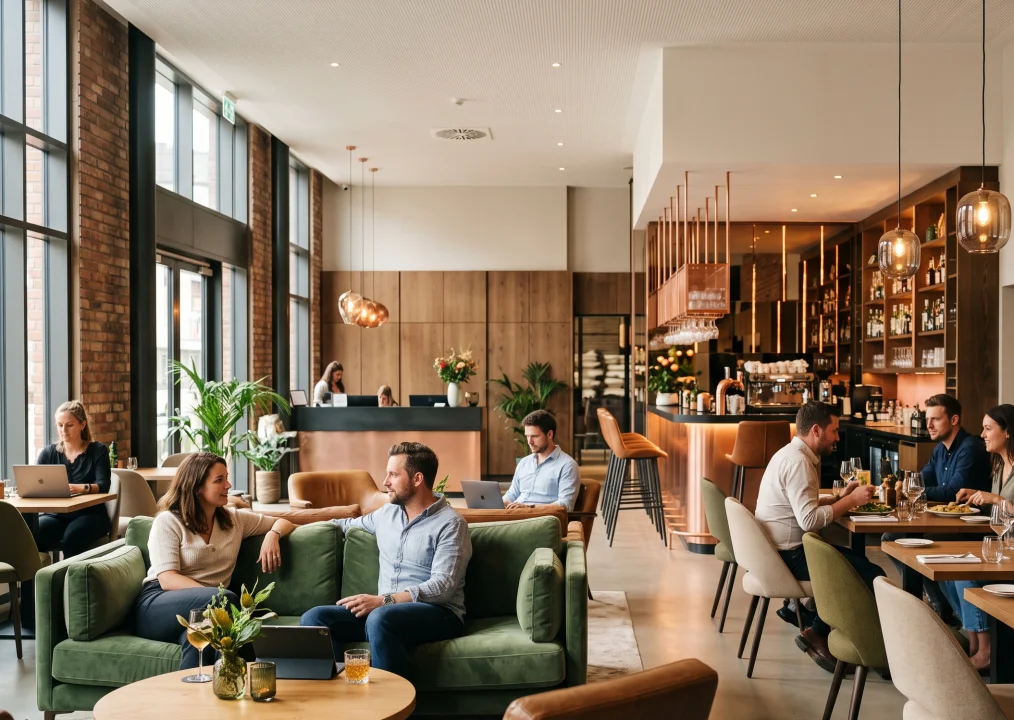
Furniture plays a crucial role in shaping the identity of hotels, restaurants, cafés, and other hospitality environments. As the industry becomes increasingly focused on creating memorable guest experiences, furniture is being treated as more than a functional requirement.
Designers and hospitality businesses are looking for products that combine comfort, durability, visual identity, flexibility, and increasingly, sustainability.
This shift is influencing everything from hotel room furniture to restaurant seating and lobby environments.
Furniture Becomes Part of the Guest Experience
In hospitality design, every physical element contributes to how guests perceive a space.
A lounge chair can influence how comfortable a hotel lobby feels. A restaurant table can affect the dining experience. A reception desk can establish the first impression of an entire hotel.
For this reason, furniture selection is becoming increasingly connected to brand identity.
Hotels and restaurants are looking for furniture collections that communicate a particular atmosphere rather than simply filling available spaces.
Durability Remains a Priority
Hospitality furniture must withstand significantly more frequent use than most residential furniture.
Chairs, tables, sofas, beds, and storage systems may be used by hundreds of guests over their lifetimes. As a result, manufacturers must carefully consider structural strength, upholstery performance, surface resistance, and ease of maintenance.
Commercial-grade materials are therefore becoming increasingly important for hospitality projects.
Flexible Furniture Supports Changing Spaces
Hotels and restaurants are also looking for greater flexibility.
Modular sofas, movable tables, lightweight chairs, and adaptable partitions allow spaces to change according to different activities.
A hotel lounge may function as a breakfast area in the morning, a workspace during the afternoon, and a social environment in the evening. Flexible furniture makes these transformations easier without requiring major architectural changes.
Sustainability Becomes a Purchasing Factor
Sustainability is increasingly influencing hospitality furniture decisions.
Hotels and restaurants are exploring responsibly sourced timber, recycled materials, durable textiles, and furniture designed for repair and refurbishment.
Longer-lasting products can also reduce replacement costs and minimize waste over the lifetime of a project.
For hospitality operators, sustainability is becoming connected to both environmental responsibility and long-term business efficiency.
Local Craftsmanship Gains Attention
Many hospitality projects are incorporating locally produced furniture and handcrafted elements.
Using regional materials and craftsmanship can help hotels and restaurants create distinctive interiors while establishing a stronger connection to their location.
This approach can be particularly effective for boutique hotels, where local identity and storytelling are important parts of the guest experience.
Outdoor Hospitality Spaces Expand
Outdoor areas are becoming increasingly valuable to hospitality businesses.
Hotels, restaurants, cafés, and resorts are investing in terraces, rooftops, gardens, and poolside environments that extend the usable area of their properties.
This has created demand for outdoor furniture capable of combining weather resistance with the comfort and visual quality traditionally associated with indoor furniture.
Technology Enters Hospitality Furniture
Technology is increasingly being incorporated into hospitality furniture as well.
Guest rooms and public spaces can feature furniture with integrated charging points, wireless charging surfaces, lighting, and connectivity features.
In hotel rooms, these additions can improve convenience while reducing visible cables and equipment.
The challenge for manufacturers is ensuring that technology remains discreet and easy to maintain.
Customization Defines Luxury Hospitality
High-end hospitality projects often require furniture specifically developed for a particular property.
Custom dimensions, upholstery, finishes, materials, and configurations allow designers to create environments that cannot easily be replicated elsewhere.
For furniture manufacturers, this creates opportunities to work directly with architects and interior designers on bespoke projects.
The Future of Hospitality Furniture
The hospitality furniture market is likely to continue moving toward flexible, durable, sustainable, and highly personalized solutions.
Manufacturers will need to respond to changing guest expectations while maintaining competitive pricing and reliable production. Products that can be repaired, reconfigured, or refurbished may become particularly valuable as hospitality businesses seek to extend furniture lifecycles.
Technology will also continue to influence product development, but successful hospitality furniture will remain focused on the fundamental priorities of comfort, usability, durability, and design.
Hospitality furniture is evolving alongside the changing expectations of hotel and restaurant guests. Flexible layouts, durable materials, sustainable production, local craftsmanship, outdoor environments, and integrated technology are all influencing the next generation of commercial furniture.
For manufacturers, the hospitality sector offers significant opportunities for innovation, particularly for companies capable of combining practical performance with distinctive design.
As hotels, restaurants, and resorts continue to invest in memorable environments, furniture will remain one of the most important tools for shaping the guest experience.
FurniPress continues to follow developments across the furniture and interior industries, bringing attention to the products, technologies, and strategies influencing the future of hospitality design.