
Bontempi Casa Furniture Review from an Interior Design Perspective
Explore Bontempi Casa furniture through an interior design lens, from sculptural dining tables and upholstered chairs to materials, finishes and living spaces.
This article is shown in its original language. Translation is pending. (TR)
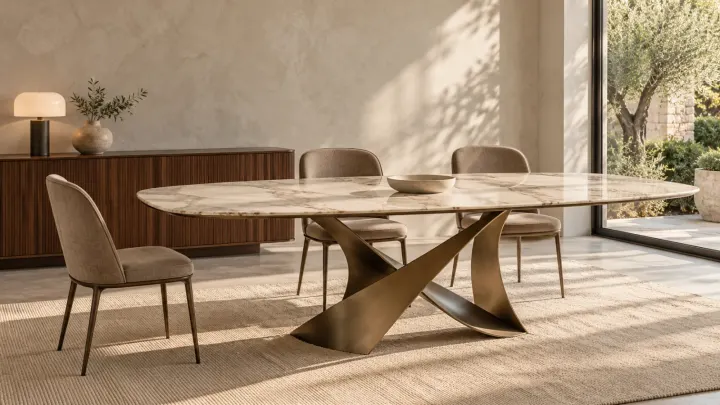
A dining table does a surprising amount of work in a room. It sets the scale of the dining area, influences the choice of chairs and lighting, and often becomes the place where daily life gathers. That is why Bontempi Casa is worth a closer look. Its dining collections offer a useful starting point for discussing how contemporary Italian furniture can give a home character while accommodating everyday routines.
What interests me most about Bontempi is the relationship between an expressive frame and the materials around it. A sculptural base can bring energy to a quiet interior; a softer chair or a carefully chosen wood finish can make that same composition feel more relaxed. The appeal lies in how those decisions work together.
The Italian Furniture Company Behind Bontempi Casa
Bontempi’s history began in 1963, when Alessandro and Giancarlo Bontempi established Mobilfer, a business specialising in handcrafted metalworking. The Bontempi Casa brand followed in 1980, launching collections of tables, chairs, stools and coffee tables. Based in Camerano, near Ancona, the company has grown from those metalworking roots into a broad furniture business.
Today, its collection extends across dining tables, seating, sofas, sideboards, bookcases, lighting and accessories. Bontempi became part of Colombini Group in 2021, and the group’s current brand profile describes its production chain as entirely Made in Italy.
That early connection with metal is an interesting way to read the furniture today. Looking at the crossed base of Artistico, for example, I see a structural element being given a decorative role. It helps explain why a table can become such a strong presence within a Bontempi dining scheme.
A Design Language Built Around the Room
From an interior design perspective, Bontempi’s appeal is its willingness to give practical furniture a visible personality. The design conversation can begin below the tabletop, in the shape of a base, or at the edge of a chair, where a line of piping changes its outline.
This approach gives a designer room to be selective. A dining area might need one confident focal point, while the surrounding furniture remains relatively quiet. Elsewhere, especially in a large open living space, a more substantial combination may help the dining zone feel properly defined.
The collection rewards that kind of selectivity. Choosing which element leads makes it easier to decide how the remaining pieces should relate to it.
Artistico and the Appeal of a Sculptural Base
Designed by Pocci & Dondoli, Artistico is a clear expression of Bontempi’s approach to the dining table. Its crossed metal base gives it a distinctive silhouette, while the wider collection offers fixed and extending versions. Tabletop choices include wood, glass, SuperCeramic, SuperMarble and natural marble, depending on the configuration.
I would treat Artistico as a principal piece within the room. A strongly patterned top already brings movement to the composition, so quieter upholstery and an uncomplicated pendant light would keep attention on the table. In a room with decorative flooring, a more restrained tabletop could create a better balance.
The useful question is how much visual activity the room can comfortably hold. Artistico offers plenty of character on its own.
Millennium and Flexible Dining
Millennium, also designed by Pocci & Dondoli, offers fixed and extending options with lacquered metal frames. One specific example is the barrel-shaped 53.90 version, which extends from 170 to 210 or 250 cm, with a width of 106 cm. That gives a clear sense of how the table can adapt between daily use and larger gatherings. Tables Bontempi
For a real project, I would draw both its everyday and fully extended footprints on the plan. Chairs need space when occupied, and the route past the dining area still has to work when guests arrive. Checking the position of the base against the chosen chairs matters too.
An extending table becomes useful when the room supports the change. That planning step is just as important as selecting the finish.
Bontempi Chairs and the Details That Soften a Dining Room
A dining scheme needs to feel inviting at chair level. Clara is a helpful example: it is padded and available with fully upholstered legs or exposed lacquered metal legs, with piping that can match or contrast with the upholstery. Certain upholstery options also allow a quilted backrest.
Those details have a noticeable effect on a composition. Matching piping creates a gentler outline around a visually assertive table. Contrasting piping gives the chair a more defined edge and can introduce a subtle connection to another colour in the room.
The version with exposed metal legs offers another opportunity to connect the seating to a table base or light fitting. Repeating one related finish can be enough to bring the pieces together.
Comfort still deserves an in-person check. Seat depth, back support and the relationship between chair and tabletop should suit the people who will use them. A photograph can help with the visual decision, but sitting at the proposed combination is a valuable part of choosing it.
Materials and Finishes in Everyday Use
Material selection is where a Bontempi furniture scheme becomes personal. Wood, glass and marble effects create different moods, even when the underlying design remains the same.
One distinction matters when reading the catalogue: SuperMarble is an engineered surface combining glass and porcelain stoneware with a marble-effect print. Natural marble is a separate material option within selected product ranges. Understanding that difference helps buyers choose according to the appearance, composition and care requirements they want.
Bontempi’s maintenance guidance describes its Super tops as resistant to scratching and abrasion, while also advising against impacts from hard or sharp objects at the edges. That is useful context for a dining table intended for frequent use.
Physical samples deserve a place alongside the flooring, upholstery and wall colours before the final choice is made. A warm vein in a tabletop might suggest the tone of a chair fabric. A darker wood could give a pale room more depth. These small relationships usually matter more than how impressive a single finish looks on a screen.
Beyond Dining Tables and Chairs
The Musa sideboard shows how Bontempi’s collection can contribute to the rest of a living and dining space. Designed by E-GGS, it combines a wooden frame with clear-glass internal shelves and is offered in several sizes. Its vertically grooved doors add surface detail, and the design received recognition in the Furniture category of the German Design Award.
I would consider Musa where a dining room needs storage and a more settled relationship with the wall behind the table. Its textured front could sit comfortably alongside plain plaster or a quiet painted surface, with a simple lamp and a few objects above it.
Proportion would guide the choice of size. A sideboard needs to relate to the wall, the dining table and the walking route between them. Leaving some visible wall around it can make the entire arrangement feel more considered.
Customisation That Helps a Scheme Come Together
Bontempi’s choice of finishes and configurations gives designers several ways to connect individual pieces. Its current multi-product configurator also allows tables, chairs and accessories to be considered together, with materials and finishes selected as part of a wider composition.
That is particularly useful for an open living area, where furniture is seen from several directions. The largest surfaces already present make a sensible starting point: the floor, kitchen cabinetry and walls. From there, a small palette of related finishes can connect the dining area to the rest of the home.
For example, a warm wood tone, a subdued metal finish and textured neutral upholstery could create continuity without making every item identical. The configurator can help explore that idea before physical samples are brought together.
The final specification should identify the exact model, size, finish and upholstery. Options vary between versions, so a preferred combination needs to be checked against the selected product.
Where Bontempi Casa Works Best
I would shortlist Bontempi Casa for a contemporary home where the dining area needs a clear identity. The collection is especially interesting for someone who enjoys expressive furniture and wants to build a coherent room around a few carefully chosen pieces.
A warm modern interior could take its direction from wood and softly textured seating. A more graphic scheme might begin with darker metal and sharper contrasts. In an open apartment, an extending table could be worth considering if its dimensions work comfortably in both arrangements.
The main design challenge is restraint. Combining a prominent base, a heavily veined top, decorative chairs and a dramatic light can make the dining area feel busy. Deciding where the eye should settle first helps narrow the other choices.
Before ordering, confirm the complete specification, delivery access and local after-sales arrangements with the retailer. Those practical details belong in the design process from the beginning.
The Interior Design Verdict
Bontempi Casa earns consideration through the possibilities it offers for shaping a room. Artistico provides a strong focal point, Millennium introduces flexibility, and pieces such as Clara and Musa bring seating and storage into the same design conversation.
My preference would be to use the collection with a clear idea of the space in mind: the way daylight reaches the table, the view from the sofa, and the ease of moving between the two. Careful proportions and a controlled material palette make those relationships work. The room should feel just as considered when dinner is on the table and the chairs are pulled out.
Comments
0 comments
No published comments yet. Be the first to join the conversation.