
How Digital Twin Technology Is Transforming the Furniture Industry
Discover how digital twin technology is revolutionizing the furniture industry through smarter design, manufacturing, customization, and lifecycle management.
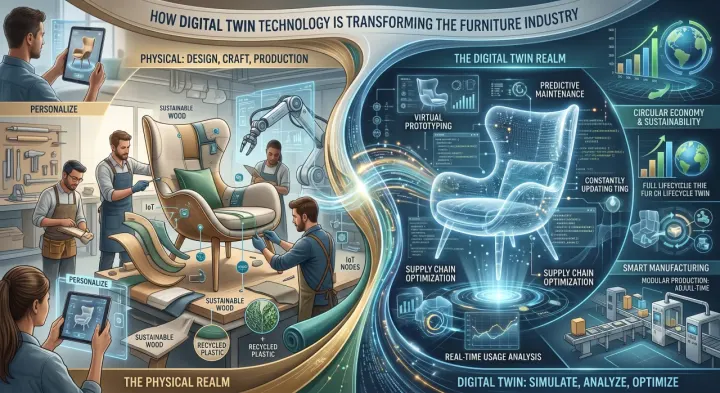
The furniture industry is entering a new era where digital innovation is becoming just as important as craftsmanship. While technologies such as artificial intelligence and automation continue to evolve, another concept is rapidly gaining attention: digital twins. Originally developed for aerospace and industrial engineering, digital twin technology is now reshaping the way furniture is designed, manufactured, and maintained.
According to industry trends covered by FurniPress, digital twins are helping manufacturers improve efficiency, reduce waste, and deliver more personalized products without compromising quality.
What Is a Digital Twin?
A digital twin is a virtual replica of a physical object. Unlike a simple 3D model, a digital twin continuously reflects data about the real product throughout its lifecycle.
For furniture manufacturers, this means every table, chair, or cabinet can have a digital counterpart that provides valuable information during design, production, transportation, and even long-term use.
Improving Product Development
Creating physical prototypes has traditionally required significant time and investment.
With digital twin technology, designers can simulate how furniture will perform before manufacturing begins. They can evaluate structural strength, test different materials, and identify design improvements without producing multiple physical samples.
This accelerates product development while reducing material waste.
Smarter Manufacturing Processes
Factories are increasingly using digital twins to monitor production lines in real time.
By analyzing machine performance, production speed, and quality control data, manufacturers can detect potential issues before they become costly problems. This predictive approach improves efficiency while minimizing downtime.
The result is a more reliable and sustainable manufacturing process.
Better Product Customization
Consumers increasingly expect personalized furniture tailored to their homes and lifestyles.
Digital twin technology enables manufacturers to test different dimensions, finishes, materials, and configurations digitally before production starts. Customers gain greater confidence in their purchasing decisions while manufacturers reduce the likelihood of costly errors.
Supporting Predictive Maintenance
Digital twins also offer advantages after furniture has been delivered.
Commercial environments such as hotels, offices, and public spaces can use digital records to monitor furniture usage, schedule maintenance, and identify components that may require replacement before failure occurs.
This extends product lifespan and reduces maintenance costs.
Sustainability Through Data
Environmental responsibility is becoming a priority throughout the furniture industry.
Digital twins help manufacturers optimize material usage, reduce unnecessary inventory, improve logistics, and lower energy consumption during production. These efficiencies contribute to more sustainable business practices while reducing overall environmental impact.
The Future of Connected Furniture
As smart furniture becomes more common, digital twins are expected to play an even larger role.
Future furniture may include embedded sensors that communicate with its digital counterpart, providing information about structural condition, usage patterns, and maintenance needs. This integration could transform furniture from a static product into an intelligent, connected asset.
Challenges Ahead
Although digital twin technology offers significant advantages, adoption requires investment in software, data infrastructure, and employee training.
Smaller manufacturers may initially face implementation challenges, but as digital tools become more accessible, experts expect adoption across companies of all sizes.
Digital twin technology is changing far more than manufacturing—it is redefining the entire furniture lifecycle. From product development and factory operations to customization and long-term maintenance, virtual replicas are helping companies create smarter, more sustainable, and more efficient furniture.
As innovation continues to reshape the industry, FurniPress remains committed to covering the technologies that are influencing the future of furniture design and manufacturing, helping professionals stay informed in an increasingly digital world.
Comments
0 comments
No published comments yet. Be the first to join the conversation.