
How Automation Is Changing Furniture Manufacturing
Explore how automation is transforming furniture manufacturing through robotics, precision, smart production systems, and more efficient workflows.
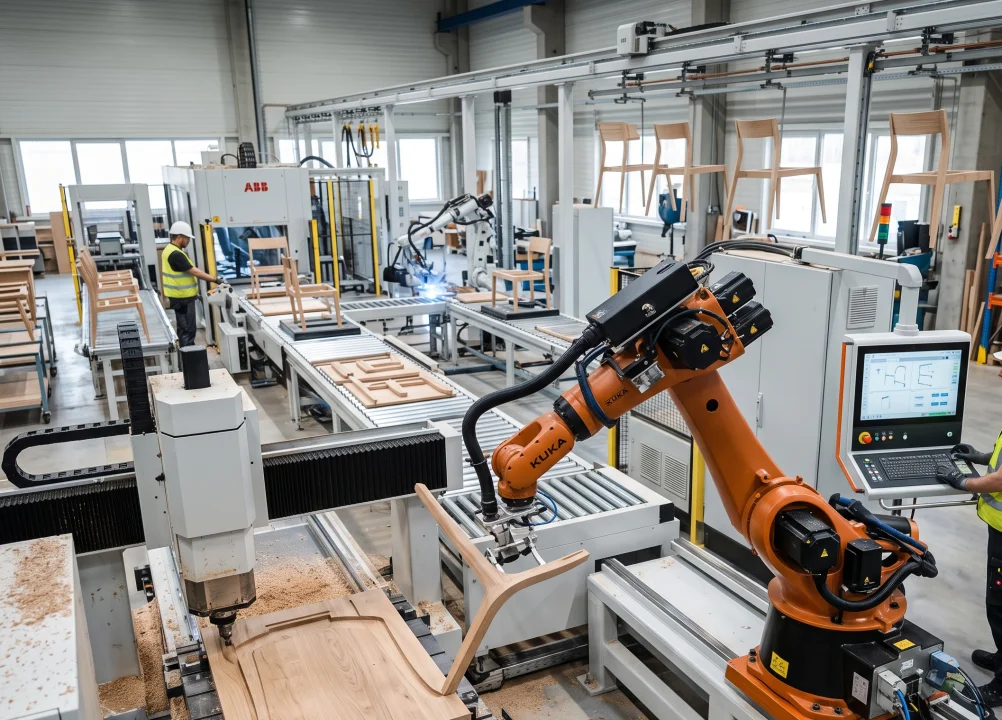
The furniture manufacturing industry is entering a period of rapid technological change. While craftsmanship and traditional production techniques remain essential, manufacturers are increasingly incorporating automation into factories to improve efficiency, consistency, and production capacity.
From automated cutting and CNC machining to robotic assembly and intelligent quality control, modern production facilities are becoming more connected and data-driven. For manufacturers, the challenge is no longer simply producing furniture at scale. It is finding the right balance between technology, craftsmanship, flexibility, and cost efficiency.
Automation Is Moving Beyond Large-Scale Production
Automation was once primarily associated with high-volume manufacturing. Today, advances in digital production technology are making automated systems increasingly relevant for manufacturers producing customized and smaller-batch furniture.
Computer-controlled machinery can switch between different designs with relatively little manual intervention. This allows factories to respond more efficiently to changing customer demands while maintaining consistent production standards.
For manufacturers, this flexibility can be particularly valuable in markets where consumers increasingly expect customized dimensions, materials, and finishes.
CNC Machinery Improves Production Precision
CNC technology has become an important component of modern furniture manufacturing.
Computer-controlled routers, saws, and milling machines can produce highly precise components based on digital design files. This reduces inconsistencies between individual pieces and allows manufacturers to reproduce complex shapes more accurately.
CNC production also creates a direct connection between design and manufacturing. Furniture designers can develop digital models that are subsequently translated into machine instructions, shortening the distance between concept and physical product.
Robotics Enters Furniture Assembly
Robotic systems are increasingly being explored for repetitive manufacturing tasks.
Depending on the production environment, robots can assist with activities such as material handling, sanding, drilling, finishing, packaging, and component assembly.
The goal is not necessarily to eliminate human involvement. Instead, automation allows employees to focus on tasks requiring craftsmanship, problem-solving, quality assessment, and creative decision-making.
This combination of human expertise and automated production can create more efficient manufacturing environments.
Smart Factories Improve Production Visibility
Automation becomes even more powerful when machines are connected through digital systems.
Smart factory technologies allow manufacturers to collect information from different stages of production. Data concerning machine performance, production times, material consumption, and quality can be analyzed to identify inefficiencies.
Manufacturers can use this information to make better decisions about production planning and resource allocation.
Real-time visibility also makes it easier to identify bottlenecks before they significantly affect delivery schedules.
Automation and Sustainable Manufacturing
Reducing waste has become an important consideration for furniture manufacturers.
Automated cutting systems can optimize how components are positioned on wood panels, sheet materials, and other surfaces. Better optimization means more efficient material use and fewer unnecessary offcuts.
Automation can also help manufacturers monitor energy consumption and improve production planning, supporting broader sustainability goals.
For companies facing increasing pressure to reduce their environmental impact, these capabilities are becoming increasingly valuable.
The Role of Artificial Intelligence
Artificial intelligence is expected to take automation to another level.
AI-powered systems can analyze production data and identify patterns that may not be immediately visible to human operators. This can support predictive maintenance, demand forecasting, inventory planning, and quality control.
For example, a system could identify unusual machine behavior and alert technicians before equipment failure interrupts production.
AI can also assist manufacturers in determining which products are likely to experience increased demand, helping factories better align production with market conditions.
Automation Does Not Replace Craftsmanship
Despite the rapid development of technology, craftsmanship remains a major competitive advantage for furniture manufacturers.
Luxury and premium furniture often depend on details that require human judgment, including material selection, finishing, upholstery, joinery, and quality assessment.
Automation can provide precision and consistency, while skilled workers provide experience and attention to detail. The most successful manufacturing models are likely to combine these strengths rather than choosing one over the other.
Workforce Skills Are Changing
As factories become more automated, the skills required within manufacturing facilities are also evolving.
Manufacturers increasingly need employees who understand digital production systems, CNC machinery, robotics, software, data analysis, and equipment maintenance.
This creates new opportunities for technical specialists while making workforce training an important investment for companies planning their digital transformation.
The Challenge of Investment
Automation can offer significant long-term benefits, but implementation requires careful planning.
Manufacturers must consider equipment costs, software integration, employee training, maintenance, and production requirements before investing in new systems.
For smaller manufacturers, a complete factory transformation may not be practical. A gradual approach can allow companies to automate specific stages of production where the greatest efficiency gains can be achieved.
What Manufacturers Should Consider Next
The future of furniture manufacturing will likely involve a combination of automation, digital design, artificial intelligence, and skilled human labor.
Manufacturers looking to modernize their operations should evaluate where automation can create measurable value rather than adopting technology simply because it is new. Production volume, product complexity, customization requirements, workforce capabilities, and long-term business goals should all influence investment decisions.
The most effective factories will be those that use technology strategically while preserving the craftsmanship and design expertise that make furniture distinctive.
Automation is transforming furniture manufacturing by improving precision, efficiency, flexibility, and production visibility. CNC machinery, robotics, smart factory systems, and artificial intelligence are giving manufacturers new tools to respond to increasingly complex market demands.
However, technology is only one part of the equation. Human expertise remains essential for craftsmanship, quality control, design development, and problem-solving.
The future of furniture manufacturing will therefore not simply belong to automated factories. It will belong to manufacturers that successfully combine advanced technology with skilled people, efficient processes, and a clear understanding of what customers value.
FurniPress Manufacturer Insights continues to explore the technologies, strategies, and production trends helping furniture manufacturers prepare for the next stage of the global industry.
Comments