
Furniture Manufacturers Rethink Supply Chains as Production Becomes More Flexible
Furniture manufacturers are redesigning supply chains to improve production flexibility, manage material costs, reduce delays, and respond faster to changing customer demand.
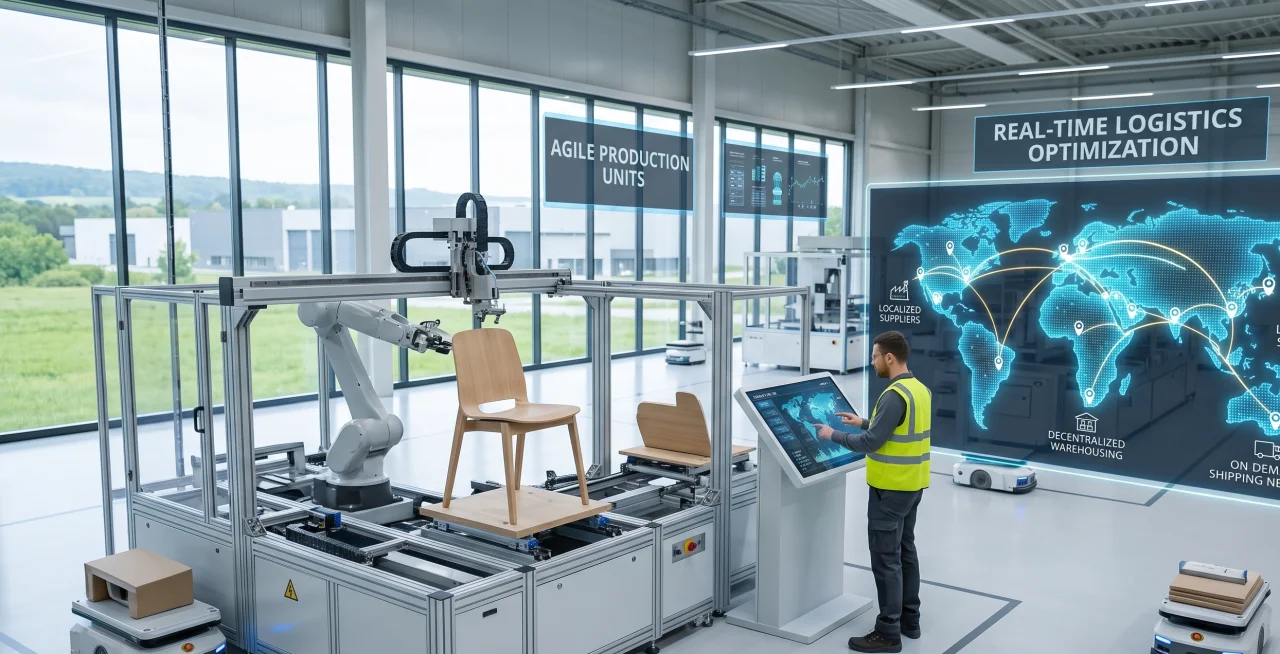
The furniture manufacturing industry is changing the way it approaches supply chain management as customer expectations, material availability, and production requirements continue to evolve. Manufacturers are increasingly looking beyond individual factories and focusing on the entire journey of a product, from raw material sourcing to final delivery.
This shift is encouraging companies to build more flexible and transparent supply chains that can respond quickly to changing market conditions while maintaining product quality and production efficiency.
Supply Chain Management Becomes a Strategic Priority
For furniture manufacturers, supply chain management has traditionally focused on securing materials and delivering finished products on time. Today, the process has become considerably more complex.
Furniture production can involve timber, metals, fabrics, foam, glass, stone, hardware, coatings, packaging, and numerous specialized components. A delay in one part of the process can affect the entire production schedule.
As a result, manufacturers are placing greater emphasis on visibility across their supply networks.
Diversifying Material Suppliers
Dependence on a single supplier can create significant risks when production schedules are tight.
Manufacturers are increasingly exploring multiple sourcing options for important materials and components. Having alternative suppliers can provide greater flexibility when availability, transportation, or pricing changes.
However, diversification also requires careful quality control. Different suppliers must be able to meet the same technical and aesthetic requirements to ensure consistency across furniture collections.
Local and Regional Sourcing Gains Attention
Some manufacturers are also reconsidering the distance between suppliers and production facilities.
Regional sourcing can reduce transportation requirements and make communication with suppliers easier. Shorter supply chains may also provide manufacturers with greater control over delivery schedules and quality inspections.
Local sourcing can be particularly valuable for customized and made-to-order furniture, where production flexibility is more important than maintaining large inventories.
Digital Tools Improve Supply Chain Visibility
Technology is playing an increasingly important role in supply chain management.
Manufacturers can use enterprise software, inventory management systems, and production planning platforms to monitor materials and track orders across different stages of production.
Digital systems can provide information about:
- Available inventory
- Incoming materials
- Production schedules
- Supplier performance
- Delivery timelines
- Material consumption
- Order status
Greater visibility allows manufacturers to identify potential problems earlier and make faster operational decisions.
Inventory Management Becomes More Precise
Holding too much inventory can increase storage costs, while holding too little can interrupt production.
Furniture manufacturers are therefore looking for a balance between availability and efficiency. Digital forecasting tools can help companies estimate material requirements based on historical sales, current orders, seasonal patterns, and expected demand.
Better forecasting can reduce unnecessary inventory while ensuring that essential components are available when production begins.
Sustainability Influences Sourcing Decisions
Environmental considerations are becoming increasingly important in supply chain planning.
Manufacturers are evaluating not only the cost and quality of materials but also their environmental impact. Responsibly sourced timber, recycled metals, recycled plastics, and lower-impact textiles are increasingly appearing in furniture production strategies.
Transportation is also receiving greater attention, with companies exploring ways to reduce unnecessary shipping distances and optimize logistics.
Traceability Becomes More Important
Consumers and commercial buyers increasingly want to understand where furniture comes from and how it was produced.
Traceability systems can help manufacturers document the origins of materials and components throughout the production process. This is particularly relevant for wood products, where responsible sourcing and certification can influence purchasing decisions.
Greater transparency can also strengthen relationships between manufacturers, retailers, designers, and customers.
Made-to-Order Production Changes the Model
The growing popularity of customized furniture is also affecting supply chains.
Instead of manufacturing large quantities of identical products in advance, some companies are adopting more flexible production models based on confirmed orders.
This approach can reduce excess inventory and allow manufacturers to respond more closely to customer requirements. However, it also requires accurate production planning and reliable supplier relationships.
Preparing for the Future
Furniture manufacturers are likely to continue investing in supply chain technologies and flexible sourcing strategies.
Artificial intelligence, predictive analytics, automated inventory systems, and real-time production monitoring could make supply networks more responsive in the coming years.
The objective is not simply to reduce costs. A resilient supply chain can also help manufacturers deliver consistent quality, respond faster to market changes, and develop more sustainable production practices.
Supply chain management has become a critical part of modern furniture manufacturing. As companies face changing consumer expectations, material requirements, and production models, flexibility and visibility are becoming just as important as manufacturing capacity.
Manufacturers that diversify suppliers, improve inventory planning, adopt digital tools, and increase material traceability can build stronger foundations for long-term growth.
The future of furniture manufacturing will depend not only on what happens inside the factory, but also on how effectively companies manage every stage of the journey from raw material to finished product.
FurniPress Manufacturer Insights continues to examine the operational strategies, technologies, and industry developments helping furniture manufacturers build more efficient and resilient businesses.
Comments