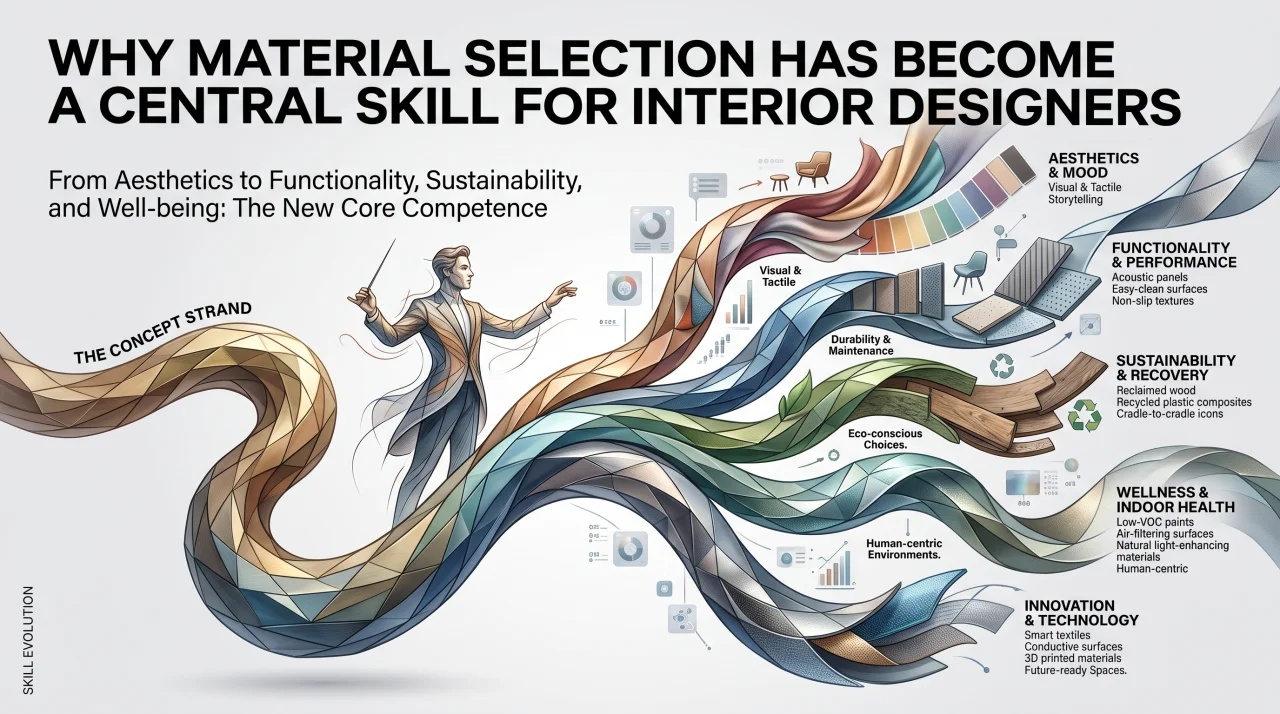
Interior design is often associated with colors, furniture, layouts, and decorative elements, but material selection is equally important in determining how a space looks, feels, and performs.
Today's interior designers are working with an increasingly broad range of materials while considering durability, sustainability, maintenance, cost, and environmental impact. This makes material research an essential part of contemporary design practice.
Materials Define the Character of a Space
Wood, stone, metal, glass, textiles, ceramics, and composite materials each create different visual and tactile experiences.
A warm timber surface can make an interior feel more welcoming, while stone can introduce a sense of permanence and solidity. Metal can create a more industrial character, while textiles can soften an otherwise architectural environment.
Combining these qualities allows designers to create visual hierarchy and depth.
Performance Is as Important as Appearance
A beautiful material is not necessarily suitable for every application.
Interior designers must consider factors such as moisture resistance, abrasion, maintenance, fire performance, UV exposure, and expected usage.
For example, a material appropriate for a decorative residential wall may not be suitable for a heavily used hospitality environment.
Understanding these differences helps designers create spaces that remain functional over time.
Sustainable Materials Expand Design Possibilities
Sustainability is also changing the way designers evaluate materials.
Recycled surfaces, responsibly sourced timber, bio-based composites, recycled metals, and low-emission finishes are becoming increasingly accessible.
These materials are not simply environmental alternatives. Many offer distinctive textures, colors, and production characteristics that can contribute to original design concepts.
Material Combinations Create Contrast
Contemporary interiors frequently use contrasting materials to create visual interest.
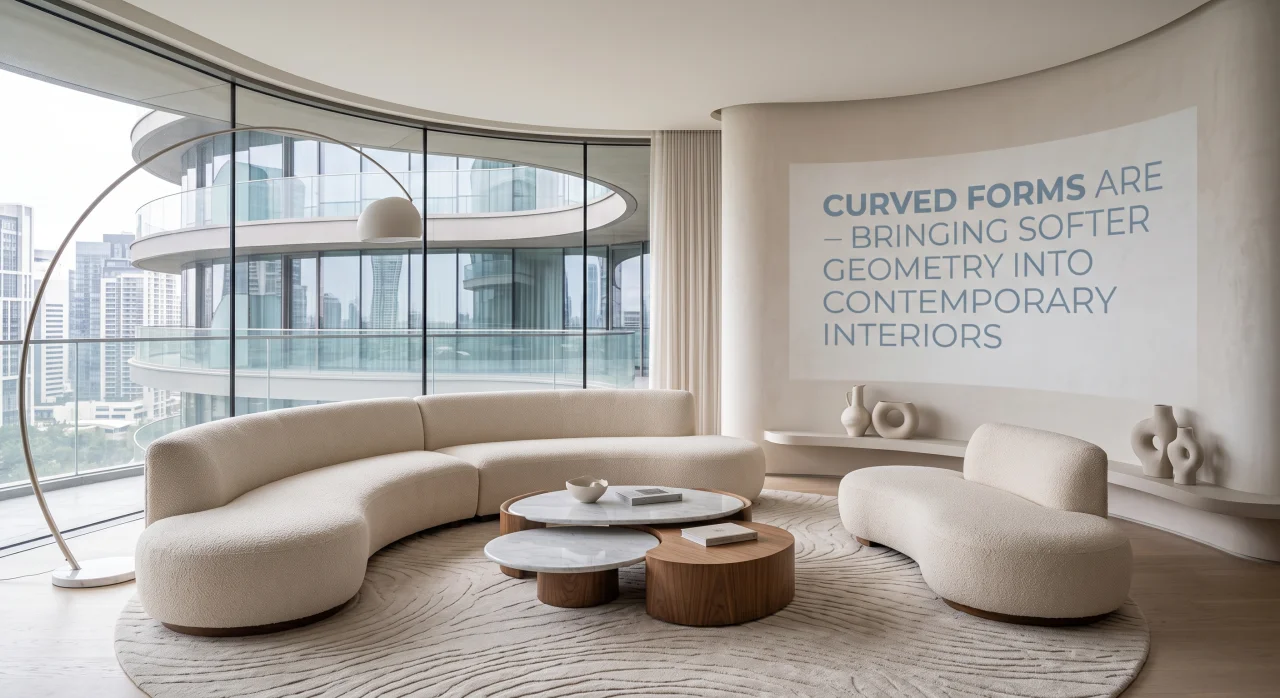
Smooth surfaces can be paired with textured finishes, natural materials can contrast with industrial elements, and warm materials can balance cooler architectural surfaces.
Successful combinations depend on proportion and repetition. Using too many competing materials can make a space feel visually fragmented, while carefully selected combinations can create a cohesive interior.
Digital Tools Support Material Selection
Technology is helping designers visualize material combinations before construction begins.
Three-dimensional modeling and digital rendering allow designers to test different surfaces, colors, and finishes within a virtual environment.
Material libraries and digital product databases also make it easier to compare technical specifications and identify suitable products for specific applications.
Material Storytelling
Materials can also communicate the identity of a space.
A restaurant may use locally sourced materials to strengthen its connection to a region. A hotel may incorporate traditional craftsmanship into contemporary interiors, while an office might emphasize recycled materials to communicate environmental values.
Material selection therefore becomes part of the story that an interior tells.
Looking Ahead
Interior designers will continue to work with an expanding range of materials as manufacturers invest in research and development.
Future projects are likely to combine traditional craftsmanship with advanced composites, recycled resources, smart surfaces, and digitally fabricated elements.
The ability to understand not only how a material looks but also how it performs and where it comes from will become increasingly important.
Material selection has become a multidimensional part of interior design. Designers must balance visual qualities with performance, sustainability, maintenance, cost, and user experience.
As material innovation accelerates, interior designers who understand these characteristics will be better equipped to create spaces that are both visually compelling and capable of performing successfully over time.