
Furniture Retailers Transform the Showroom Experience
Furniture retailers are redesigning physical showrooms with immersive displays, flexible layouts, digital tools, and personalized experiences for modern customers.
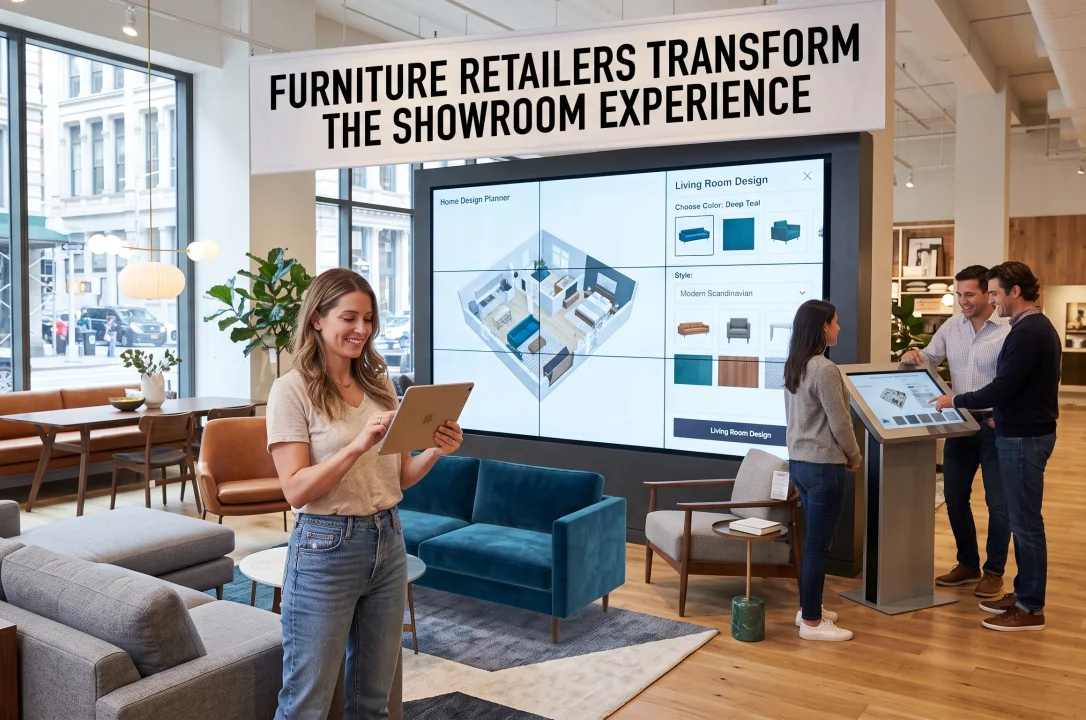
The furniture retail industry is changing as customers expect more than traditional product displays. Modern showrooms are increasingly designed as immersive environments where shoppers can experience furniture within complete interior concepts.
Rather than simply placing sofas, tables, beds, and cabinets across large floors, retailers are creating carefully curated spaces that demonstrate how individual products can work together.
Showrooms Become Design Experiences
Contemporary furniture stores increasingly resemble interior design studios.
Products are displayed in complete room settings, allowing customers to understand scale, materials, colors, and proportions more effectively.
A sofa can be presented alongside a coffee table, lighting, rug, and decorative accessories to demonstrate a complete interior concept rather than functioning as an isolated product.
Digital Tools Support Physical Shopping
Technology is becoming an important part of the showroom experience.
Interactive displays, digital catalogs, product configurators, and large-format screens allow customers to explore additional colors, materials, dimensions, and configurations.
This reduces the need to physically display every available product variation while giving customers access to a much wider selection.
Personalization Becomes More Important
Customers increasingly expect furniture shopping to reflect their individual needs.
Retailers are using digital tools and professional consultations to recommend products based on room dimensions, lifestyle, aesthetic preferences, and budget.
Personalized service can help customers make more confident purchasing decisions, particularly when buying larger furniture pieces.
Small Showrooms Can Offer More
The transformation of retail does not necessarily require larger stores.
Digital catalogs allow retailers to display fewer physical products while providing access to a much broader collection. This can help smaller showrooms use their floor space more effectively.
Instead of maximizing the number of products on display, retailers can focus on creating carefully designed environments that communicate their brand identity.
Sustainability Influences Retail Design
Furniture retailers are also considering the environmental impact of their showrooms.
Reusable display systems, recyclable materials, energy-efficient lighting, and modular exhibition structures can reduce waste when interiors are updated.
Some retailers are also using furniture displays that can later be sold, refurbished, or reused rather than discarded.
The Relationship Between Online and Offline Shopping
Online furniture shopping continues to influence physical retail.
Customers often research products online before visiting a showroom. This means physical stores increasingly function as places where customers can see, touch, and test products they have already discovered digitally.
Successful retailers are therefore connecting their websites and physical stores into a single customer journey.
Future Showrooms Will Be More Flexible
Furniture showrooms are likely to become increasingly adaptable.
Modular displays can be rearranged to introduce new collections, seasonal concepts, and changing design trends. Digital technology can provide access to products that are not physically available in the store.
The showroom of the future may therefore function as a combination of retail space, design studio, consultation center, and brand experience.
Furniture retail is moving away from traditional product-focused showrooms toward more immersive and personalized experiences.
Digital technology, flexible displays, complete room concepts, and sustainable retail practices are changing how customers interact with furniture brands.
As competition between online and physical retailers continues, the most successful showrooms will likely be those that offer something digital shopping cannot fully reproduce: the opportunity to experience furniture in person and understand how it works within a real interior.
FurniPress continues to follow the latest developments across furniture retail, interior design, and the global furniture industry, providing insights into the trends shaping the future of how furniture is presented and purchased.
Comments